
While this might seem like a complicated question, there’s a simple way to look at it. Sin is a failure to love God and love others. It is the opposite of love.
This is why the Bible’s definition of it is lawlessness, or transgression of the law of God (1 John 3:4).
The law we’re talking about here is what Jesus Himself called the two greatest commandments: love God and love your neighbor as yourself (Matthew 22:36–40).
It is selfishness, then, that breaks the law of God. And it’s something every human being struggles with. Romans 3:23 reminds us: “For all have sinned and fall short of the glory of God” (ESV).
But all is not lost. God is “merciful and gracious, longsuffering and abounding in goodness and truth…forgiving iniquity and transgression and sin” (Exodus 34:6–8, NKJV). Because of the gift of forgiveness we’re offered through Jesus Christ, He will always help us if we look to Him.
His desire for us is never condemnation; it is always forgiveness.
But what does this mean for us day by day? How do we know if we’re “sinning”?
Even when we feel like we know right from wrong, some of the choices life offers us can throw us for a loop. So we’ll break this down into the basics:
- The origin of sin
- Its definition
- Its ultimate result
- What is the unpardonable sin in the Bible?
- How can we experience God’s grace and forgiveness?
Let’s look into this topic.
What was the original sin on earth?

Photo by Georgia de Lotz on Unsplash
Sin on Earth began in the Garden of Eden, when Adam and Eve took it upon themselves to try and be like God (Genesis 3). But sin actually originated in Heaven among the angels. It started as a thought in the mind of Lucifer, who used to be a high-ranking angel but is now referred to as the Devil, or Satan (1 John 3:8).
Lucifer coveted Jesus’ position in Heaven (Isaiah 14:12–15). He wanted to be worshiped over God. When he could not become like God, he caused rebellion in Heaven and convinced one-third of the angels that God couldn’t be trusted (Ezekiel 28; Revelation 12).
God couldn’t let sin exist in Heaven, so Satan was cast out to the earth, along with the angels he deceived (Revelation 12).
Fast forward to the Garden of Eden.
God created Adam and Eve in His image—to be perfect and sinless. He gave them all they could ever want, but He gave them specific instructions:
“And the Lord God commanded the man, saying, ‘Of every tree of the garden you may freely eat; but of the tree of the knowledge of good and evil you shall not eat, for in the day that you eat of it you shall surely die’” (Genesis 2:16–17, NKJV).
However, when Satan, in the form of a serpent, tempted Eve at the tree of knowledge of good and evil, he lured her to commit the same sin he committed in heaven—to know what God knows and be as powerful as He is:
“Then the serpent said to the woman, ‘You will not surely die. For God knows that in the day you eat of it your eyes will be opened, and you will be like God, knowing good and evil’” (Genesis 3:4–5, NKJV).
Ultimately, Adam and Eve decided to distrust God and uphold their own desires, choosing selfishness over love.
They doubted He had their best interest at heart and chose to outrightly disregard the command of God by following their own desires. They chose to trust their own wisdom instead of His wisdom and believe the serpent’s words that He was withholding something “good” from them.
The consequences?
Distance from God of many kinds: emotional, physical, and spiritual distance.
They experienced emotional distance from Him because they were embarrassed, ashamed of their nakedness, and guilty. Physical distance, because they had to leave the Garden. And spiritual distance, because they couldn’t commune with God face to face anymore.
It resulted in distance and distrust in human relationships as well when Adam blamed Eve to avoid shame.
So, sin ruptures both our relationship with God and our relationships with each other. It twists the two greatest commandments—love God and love others as you love yourself—into lies:
- God is to be feared and cannot be trusted.
- Uphold yourself over others to avoid guilt and shame.
How does this story in Scripture show us what makes something a sin and what its effects are?
Let’s find out.
What is the definition of sin and what are its effects?

Photo by Adrian Curiel on Unsplash
Sin is the breaking of God’s law (1 John 3:4), which is summarized by Jesus as loving God and loving your neighbor as yourself (Matthew 22:36–40). This law goes beyond actions to a person’s motives—whether the heart is in sync with that law. In essence, then, sin is selfishness, the opposite of love.
Jesus’ Sermon on the Mount in the New Testament is a good example of this.
Here, Jesus cites two of the Ten Commandments from the Old Testament, “You shall not murder” and “You shall not commit adultery,” but He makes it clear that the action is not what constitutes the sin. Rather, Jesus says:
“You have heard that it was said to those of old, ‘You shall not murder, and whoever murders will be in danger of the judgment.’ But I say to you that whoever is angry with his brother without a cause shall be in danger of the judgment” (Matthew 5:21–22, NKJV).
And,
“I say to you that whoever looks at a woman to lust for her has already committed adultery with her in his heart” (Matthew 5:28, NKJV).
Murder is the result of hate in the heart.
Adultery is the result of lust in the heart.
The state of the heart is what initiates the sin.
So, we have to ask ourselves, honestly, At the core of this action, thought, or word, am I failing to love God and love others?
Even the Ten Commandments given to the children of Israel in Exodus 20, when boiled down, are instructions for loving God and loving others.
These two greatest commandments and the principles that highlight them, the Ten Commandments, can guide us to find what makes something a sin rather than looking for an unambiguous and exhaustive list that says, “This is a sin” and “This isn’t.”
What it comes down to is that the concept of sin is much more about the state of the heart than breaking a set of rules.
Why?
Because each of our individual situations is different.
While the Ten Commandments are essential biblical principles we use to govern our lives, the moment we determine that we can leave our hearts unchecked because simply following the rules is “enough” is the moment we forget the purpose of the Law: to teach us how to love God and how to love others.
This love requires the examination of one’s heart.
But wouldn’t it be easier if we had a complete list of sins that detailed every situation possible?
Probably. Then we could just check the list every day and that would be that.
But then, our whole faith would be based on avoiding specific actions. No relationship, no personal growth, no critical thinking or empathy needed.
That’s not a life of love in Christ. Simply following rules without examining the heart doesn’t lead to spiritual maturity.
That’s what happened to the Pharisees and Sadducees. They created additional rules to help them keep the Ten Commandments and became so focused on the minute details that they lost sight of the ultimate purpose of the law. They were missing a loving relationship with God as their motive.
More than anything, God wants us to have a relationship with Him in which we choose to love Him. That’s what makes it real.
We choose to examine our hearts and find what harms others or hurts God or inappropriately upholds self over others.
Let’s flashback, one more time, to the Garden of Eden.
The sin wasn’t about eating a random fruit. It wasn’t even about listening to the serpent.
Humankind’s original sin was choosing to place self over God.
When Adam and Eve chose what was right or wrong on their own terms and ignored God’s direction, when they chose to love themselves over Him and distrust Him, that’s when they sinned. And that’s when they felt they needed to distance themselves from God by hiding (Genesis 3:10).
Same for us today. When we distance ourselves from God, we continue to hurt ourselves, others, and God since He longs to be in a close relationship with us.
This leads us to our next question…
What is the ultimate result of sin?

Scripture is clear in Romans 6:23 about the effects of sin in the grand scheme of human existence: “For the wages of sin is death” (NKJV).
This doesn’t mean that right when we sin, we die. Think of Adam and Eve in the Garden—they were told they would die, but rather than dying immediately, they began to experience the process of death.
In this verse, Paul is saying that without Jesus’ salvation, the consequence of sin is eternal death. But the remedy is expressed in the next section of that same verse. It says that “the gift of God is eternal life.”
Without Jesus, humanity would face the natural consequences of sinning: pain, suffering, and eternal death. Without His forgiveness, sin would impact our lives here on earth and for eternity. That’s what forever looks like when sin rules instead of love.
Eternal death is the ultimate effect of sin in the grand scheme of humanity (Revelation 20:14), but what is the effect of sin on the individual? What happens to our hearts?
What happens when we sin?
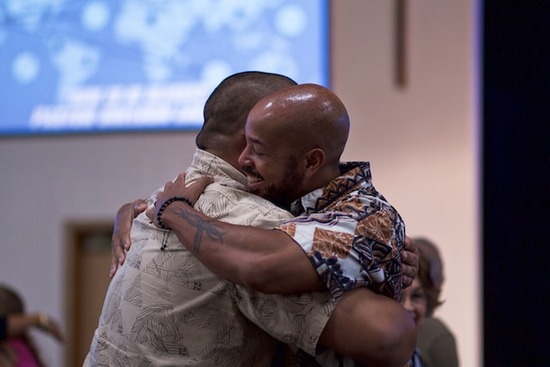
Photo by Erika Giraud on Unsplash
Whenever we sin, the effect is separation from God. Because He is complete love, sin can’t exist in His presence. It fills us with a sense of condemnation and guilt that makes us want to stay away from Him.
Prophet Isaiah says this: “Your iniquities have separated you from your God” (Isaiah 59:2, NKJV).
But He doesn’t want to be separated from us. It’s just the opposite. He longs to be near us and in a relationship with His children.
Sin separates us from God in both a metaphorical and physical sense because it becomes more difficult to love Him and others—emotional and spiritual distance—and because, ultimately, the choice to cherish self over God will lead to eternal physical separation from Him.
Imagine if you wronged a friend and then, without apologizing, continued to wrong the friend again and again. Wouldn’t the natural result be more distance between the two of you and, eventually, a falling out?
Distance without reconciliation often results in more distance, and the increasing rupture of that relationship makes it easier and easier to act in ways that hurt both ourselves and our friend.
Sin does the same to our hearts.
The more we sin without repentance, the further the distance we drive between ourselves and God, which eventually leads to the unpardonable sin (we’ll talk about this in the next section).
As a general guideline, things that separate us from God are things that break the two greatest commandments that Jesus shares. Again, a good place to see how this kind of relational rupture happens is the Ten Commandments.
Commandments 1-4 give us principles we can follow to love God.
Principles 1-4
1. Have no other gods
2. Do not worship any idols
3. Use the name of God only with respect
4. Keep the Sabbath day holy
Commandments 5–10 give us principles we can follow to love others.
Principles 5-10
5. Honor your father and mother
6. Do not murder
7. Do not commit adultery
8. Do not steal
9. Do not bear false witness
10. Do not covet your neighbor’s belongings
When we fail to love God and others, it will be more difficult for us to know what is right and wrong. We do what is right in our own eyes and deceive ourselves into thinking bad decisions are good ones.
We act for our benefit at the expense of others.
This doesn’t mean that you need to loathe yourself. To look at yourself and say, “I am worthless,” or “I am undeserving of love” is also to say that God’s creation is worthless and undeserving of love. Being selfless is not the same as self-loathing. In fact, self-indulgence and self-loathing are both forms of selfishness, and to loathe yourself would be a mistrust in God—again, prioritizing a human definition of right and wrong versus a God-ordained definition.
The key to not deceiving ourselves into thinking that we know what is best is to listen to the calling of the Holy Spirit on our conscience.
The Holy Spirit guides us away from sin and reminds us that God is the source of wisdom (James 1:5).
Specifically, the Bible tells us that the Holy Spirit can convict us of wrong and lead us to truth (John 16:8,13).
But how do you know if the Holy Spirit is calling you to truth and it’s not just some random impression?
In this case, familiarizing yourself with the Bible and testing the tug on your conscience with its principles can be helpful.
The Holy Spirit is also important for understanding the unpardonable sin and how to avoid it. Maybe you’ve heard about it before and have questions. Hopefully, the next section can provide some answers.
What is the unpardonable sin in the Bible?

Photo on Unsplash
The unpardonable sin happens when we reject the Holy Spirit so many times that we no longer sense His calling on our conscience.
You may ask, Why is it called “unpardonable”?
Well, it’s because God has no other means to reach a heart. The person has rejected Him so much—expressed repeated defiance towards Him—that there is no way for the heart to receive pardon. Hence, “unpardonable.”
The idea of the unpardonable sin comes from one of Jesus’ teachings in Matthew:
“Therefore I say to you, any sin and blasphemy shall be forgiven men, but blasphemy against the Spirit shall not be forgiven” (Matthew 12:31, NKJV).
So how does one blaspheme against the Holy Spirit?
Time after time of ignoring and rejecting Him makes His tug on our consciences duller and duller. At the point of the unpardonable sin, we have chosen a life that will only ever reject God. Ultimately, we have chosen selfishness over selflessly loving Him and others.
Keep in mind, though, that the unpardonable sin isn’t something that happens accidentally.
And if you’re worrying that you have committed it, chances are, you haven’t. You are sensing your need for salvation, and that means the Holy Spirit is there, still being heard and felt in the conscience.
The point is, it’s a process that takes time and persistent rejection of God’s offer of mercy and pardon. A process of repeatedly failing to listen to the call to love God and others to the point of rejecting the Holy Spirit. This process is intentional.
Thankfully, until that point, we have a merciful and gracious God who abundantly forgives.
The hope of forgiveness

Photo by Gift Habeshaw on Unsplash
To sinners, which includes all of us, the story of Jesus is the best news ever.
When Jesus was on this earth, He didn’t fail to love God, and He certainly didn’t fail to love others.
The Bible is clear that the plan of salvation was made so that we could be saved from our sin, and Jesus’ death on the cross is that redemption in action. In fact, the Bible tells us that because Jesus, the Son of God, died for us, “we should no longer be slaves of sin” (Romans 6:6, NKJV).
These are just a few verses that remind us that God is merciful, abundant, and forgiving, even before we ask:
“There is therefore now no condemnation for those who are in Christ Jesus, who do not walk according to the flesh, but according to the Spirit. For the law of the Spirit of life in Christ Jesus has made me free from the law of sin and death” (Romans 8:1–2, NKJV).
“For He made Him who knew no sin to be sin for us, that we might become the righteousness of God in Him” (2 Corinthians 5:21, NKJV).
“Come now, let us reason together, says the Lord: though your sins are like scarlet, they shall be as white as snow; though they are red like crimson, they shall become like wool” (Isaiah 1:18, NKJV).
“He has delivered us from the power of darkness and translated us into the kingdom of the Son of His love, in whom we have redemption, through His blood the forgiveness of sins” (Colossians 1:13–14, NKJV).
“And you He made alive, who were dead in trespasses and sins… But God, who is rich in mercy because of great love with which He loved us…made us alive together with Christ (by grace you have been saved)” (Ephesians 2:1; Ephesians 2:4–5, NKJV).
It’s such a blessing that we can fully trust in God. He knows our hearts.
Jesus’ salvation gives us hope for an abundant life full of love for Him and love for others. Let’s live out that love and remember that He always desires us to draw nearer to Him.
Struggling to draw close to God because you worry He won’t be able to forgive your sin?
Choose an Online Bible Study
Want to keep learning? Find out more about Jesus, humanity, the plan of salvation, and how God loves you enough to sacrifice everything, just to give you a chance to choose Him.
Sometimes it can be hard to know where to start, that’s why we offer free, user-friendly, online Bible study options you can do anytime, anywhere, and at your own pace.
This online Bible school will take you through the major themes of Scripture, breaking down the Bible’s complex concepts into bite-sized pieces, which can lead you toward the answers of life’s more challenging questions.
Related Articles


More Answers

The Barren Fig Tree Parable: What It Means to Bear Fruit
Find out what the Parable of the Barren Fig Tree really means.

¿Qué son las reuniones evangelísticas adventistas?
¿Qué son las reuniones evangelísticas adventistas?La Iglesia Adventista del Séptimo Día pone un gran énfasis en compartir el evangelio mediante la evangelización, o compartir el evangelio a través de la predicación, la enseñanza y el testimonio. Una de las formas en...
O que são os Encontros Evangelísticos Adventistas?
O que são os Encontros Evangelísticos Adventistas?A Igreja Adventista do Sétimo Dia dá grande ênfase ao compartilhamento do evangelho por meio da evangelização, ou seja, compartilhar o evangelho através da pregação, ensino e testemunho. Uma das formas de realizarmos...

O Que os Adventistas Acreditam Sobre Fé e Obras?
O Que os Adventistas Acreditam Sobre Fé e Obras?Os adventistas acreditam que somos salvos pela fé, que é a crença e confiança que temos em Jesus Cristo para nos salvar dos nossos pecados. Jesus, então, nos capacita a viver em harmonia com os mandamentos de Deus e a...
¿Qué creen los Adventistas sobre la fe y las obras?
¿Qué creen los Adventistas sobre la fe y las obras?Los adventistas creen que somos salvos por la fe, que es la creencia y confianza que tenemos en Jesucristo para salvarnos de nuestros pecados. Jesús, entonces, nos capacita para vivir en armonía con los mandamientos...
Je, Ninahitaji Kuwa Mwadventista Ili Niokolewe
Je, Ninahitaji Kuwa Mwadventista Ili Niokolewe?Jibu la swali hili ni rahisi, “hapana.” Linapokuja swala la wokovu katika Yesu Kristo, kinachohitajika kwa mtu ni kukiri dhabihu ya Yesu kwa ajili yetu, kuamini kwamba Ametuokoa, na kudai zawadi ya bure ya wokovu ambayo...
¿Necesito ser adventista para ser salvo?
¿Necesito ser adventista para ser salvo?La respuesta a esta pregunta es simplemente, “no.” Cuando se trata de la salvación en Jesucristo, todo lo que se requiere de una persona es reconocer el sacrificio de Jesús por nosotros, creer que Él nos ha salvado y reclamar el...
Preciso ser Adventista para ser salvo?
A resposta para essa pergunta é simplesmente: “não.”

Lo que la Biblia dice sobre la Segunda Venida de Jesucristo
¿Tienes curiosidad sobre lo que la Biblia dice acerca de la Segunda Venida de Jesucristo? Cubriremos los versículos clave y su significado.

¿Quién fue Mateo, el apóstol, en la Biblia?
En el primer libro del Nuevo Testamento, encontramos la historia del Evangelio desde la perspectiva de Mateo.
2 Corinthians: An Overview of Paul’s Most Personal Letter
Discover Paul’s lessons on forgiveness, reconciliation, generosity, and more. It’s all in the book of 2 Corinthians!
Quem Foi Mateus, o Apóstolo, na Bíblia?
Quem Foi Mateus, o Apóstolo, na Bíblia?No primeiro livro do Novo Testamento, encontramos a história do Evangelho sob a perspectiva de Mateus. Ele era um coletor de impostos judeu de Cafarnaum, no primeiro século d.C., e provavelmente era desprezado pelos outros judeus...

The Pharisee and the Tax Collector Parable: Its Meaning Made Simple
The Meaning of the Pharisee and the Tax Collector ParableIn Luke 18:9-14, Jesus told a parable about two men who went to the temple to pray. One was a Pharisee and the other a tax collector. The Pharisee prayed (well, bragged) about his own good works compared to the...
Biblia Inasema Nini Kuhusu Ujio wa Pili wa Yesu Kristo
Unajuliza Biblia inasema nini kuhusu Kurudi kwa Yesu Kristo Mara ya Pili? Tutajadili aya kuu na maana zake.

The Story of the Widow’s Mite—What It Really Means
The Story of the Widow’s Mite—What It Really MeansPeople often assume bigger is better, but the Bible turns this concept on its head with the story of the Widow’s Mite. Of all the donations Jesus sees at the temple, the gift that draws His attention is not the...

Consejo de Elena G. de White sobre la Educación Universitaria
Consejo de Elena G. de White sobre la Educación UniversitariaElena G. de White, una cofundadora importante del Adventismo, es conocida a menudo por su orientación práctica y espiritual para la educación infantil adecuada. Pero también estuvo significativamente...
Mathayo Alikuwa Nani Katika Biblia?
Mathayo Alikuwa Nani Katika Biblia?Katika kitabu cha kwanza cha Agano Jipya, tunapata simulizi la Injili kutoka kwa Mathayo. Alikuwa mtoza ushuru Myahudi kutoka Kapernaumu katika karne ya kwanza MK, na huenda alichukiwa na Wayahudi wenzake kwa kuchagua kazi hiyo....

¿Cuáles son los beneficios de vivir en el campo?
¿Cuáles son los beneficios de vivir en el campo?Visitar el campo puede ofrecer un descanso muy necesario del típico ajetreo y bullicio de la ciudad. Muchos incluso han decidido mudarse a zonas rurales para disfrutar de un ritmo más lento, espacios amplios, aire...
Quais São os Benefícios de Viver no Campo?
Visitar o campo pode oferecer uma pausa muito necessária do típico agito da cidade.

¿Qué significa la parábola de la perla de gran precio?
Esto es lo que Jesús enseñó sobre el reino de los cielos a través de esta breve parábola sobre un comerciante que encuentra una perla invaluable.
O Que Significa a Parábola da Pérola de Grande Valor?
Aqui está o que Jesus ensinou sobre o reino dos céus por meio desta parábola curta sobre um comerciante que encontra uma pérola inestimável.

Por Que Muitos Adventistas Querem Viver no Campo
Por Que Muitos Adventistas Querem Viver no CampoViver em áreas rurais é algo que os adventistas têm valorizado historicamente, embora as necessidades da vida moderna nem sempre tenham tornado isso possível. Convenhamos, as vantagens da vida na cidade são bastante...

Uma Visão Geral de Romanos: Fé, Justiça, Relacionamentos
Uma Visão Geral de Romanos: Fé, Justiça, RelacionamentosO livro de Romanos é uma das 21 epístolas, ou cartas abertas, do Novo Testamento. E embora seja um texto bíblico antigo, ainda tem uma relevância significativa (até surpreendente) para nossas vidas hoje. O...

Jesus é o Mesmo Ser que Miguel, o Arcanjo?
Jesus é o Mesmo Ser que Miguel, o Arcanjo?Muitos cristãos têm se perguntado sobre a misteriosa identidade de Miguel, o Arcanjo. Desde os primórdios do cristianismo, muitos interpretaram Miguel como o Messias identificado com a figura do Anjo do Senhor. O reformador...
Je, Faida za Kuishi Vijijini ni Zipi?
Kutembelea maeneo ya vijijini kunaweza kutoa mapumziko yanayohitajika sana kutoka kwenye pilikapilika za kawaida za mijini.
Je, Mfano wa Lulu ya Thamani Kubwa Unamaanisha Nini?
Hivi ndivyo Yesu alivyofundisha kuhusu ufalme wa mbinguni kupitia mfano huu mfupi wa mfanyabiashara aliyepata lulu ya thamani isiyo na kifani.
Kwa Nini Waadventista Wengi Wanataka Kuishi Vijijini
Kwa Nini Waadventista Wengi Wanataka Kuishi VijijiniKuishi maeneo ya vijijini ni jambo ambalo Waadventista wamekuwa wakilithamini kihistoria, ingawa mahitaji ya maisha ya kisasa hayafanyi iwezekane kila wakati. Tukubali, faida za kuishi mjini zinaonekana wazi: fursa...
Muhtasari wa Kitabu cha Warumi: Imani, Haki, Mahusiano
Hapa kuna muhtasari na historia ya waraka mrefu zaidi wa Paulo.

Sobre o que é a Parábola do Semeador de Jesus?
A parábola do semeador é, em última análise, sobre como as pessoas responderam a Jesus Cristo e Sua mensagem do reino de Deus—o Evangelho.
Didn’t find your answer? Ask us!
We understand your concern of having questions but not knowing who to ask—we’ve felt it ourselves. When you’re ready to learn more about Adventists, send us a question! We know a thing or two about Adventists.