
Ellen White, one of the founders of the Seventh-day Adventist Church, believed that education was not complete unless it was founded upon the principles of the Bible.
It’s crucial for giving students a framework through which to understand every other aspect of life.
But what does the Bible have to do with math or science? Is it important to integrate the Bible with schoolwork?
We’ll answer these questions by looking at:
- Why Ellen White cared about education
- Her insights for a Bible-based education
- Where her counsel about education came from
- How to incorporate the Bible into the classroom
Let’s first get some background to Ellen White’s emphasis on education.
Why Ellen White cared about education
Ellen White focused so much on education because she recognized its ripple effect on every other part of life. As Proverbs 22:6 states, the direction of a person’s life is shaped during the training received in the formative years. An education that leads children to know God is vital because it’ll impact them for the rest of their lives—and possibly for eternity.
Ellen White advocated for whole-person education—what she called true education.
This type of education went beyond the three Rs. She emphasized that it “is the harmonious development of the physical, the mental, and the spiritual powers.”1
It also incorporates service, a core principle of Christianity: “It prepares the student for the joy of service in this world and for the higher joy of wider service in the world to come.”2
Taking it one step further, she wrote that education, in its highest sense, is connected to the work of redemption. Both have their foundation in Jesus Christ.3
And if education is so closely tied together with redemption, it makes sense that the Bible would play an important role in both.
Ellen White’s insights for a Bible-based education

Photo by Gift Habeshaw on Unsplash
Ellen White believed in having the Bible as the foundation for education. She wrote, “The Bible is the great educator; for it is not possible prayerfully to study its sacred pages without having the intellect disciplined, ennobled, purified, and refined.”4
Though the Word of God isn’t a comprehensive textbook on every subject, it provides a worldview that can shape how a student thinks about life.
And how does it do this?
For one, the Bible shows us our origin and our ultimate purpose.
It shows us that God created humans to reflect His image. But to a great extent, we lost the image of God when Adam and Eve chose to disobey Him (Genesis 3). A Bible-based education plays a role in restoring us to reflect the character of God again.5
This restoration ties education to the Great Controversy theme in the Bible.6 The Great Controversy is the unseen battle between good and evil—God and Satan—happening at this very moment. Satan has worked hard to skew our understanding of God and turn Him into something He is not.
Educating children within a biblical framework can help them see God’s true character and the way the love of God can transform their lives.
When it comes to the use of the Bible in the classroom, Ellen White offered balanced guidelines. The Word of God couldn’t just be inserted into the curriculum to “flavor” the other subjects.7
She wrote,
“The Bible should not be brought into our schools to be sandwiched in between infidelity. The Bible must be made the groundwork and subject matter of education.”8
In other words, teachers and students shouldn’t treat the Bible like every other textbook that may or may not contradict Christian teachings. Rather, the Bible is the authority for evaluating every other textbook.
But the Bible can’t be the only textbook, either.9 Not every subject is in the Bible.
What Ellen White advocated for is an education through the lens of a biblical worldview. This means that the subject matter of the classes promotes the values of the Bible and points to Jesus. The students learn to evaluate everything by the principles of the Bible.
But what is the purpose of a biblical framework after the child has finished school?
Proverbs 22:6 tells us,
“Train up a child in the way he should go, and when he is old he will not depart from it.”

Photo by Stormseeker on Unsplash
This is what a biblical education seeks to do—to teach students to use the Bible to think and reason for themselves all throughout life. Ellen White said,
“It is the work of true education to develop this power, to train the youth to be thinkers, and not mere reflectors of other men’s thought.”10
As a result, students will have the skills to discern truth with the help of the Holy Spirit and effectively share that truth with others.
This kind of education prepares us to be good citizens and witnesses for Christ.
Here’s how Ellen White described this philosophy:
“The Holy Scriptures are the perfect standard of truth, and as such should be given the highest place in education. To obtain an education worthy of the name, we must receive a knowledge of God, the Creator, and of Christ, the Redeemer, as they are revealed in the sacred Word.”
Now that we have seen her counsels regarding a Bible-based education, let’s see where these counsels came from.
Where Ellen White’s counsel about education came from
Everything Ellen White taught about education is solidly rooted in the Bible and the truths the Spirit of God impressed upon her.
The context in which she lived also played a role in her desire to improve educational practices. So what did education look like in her day?
Education in Ellen White’s time

Photo by Austrian National Library on Unsplash
In the mid-to-late 1800s, education in industrialized countries was far from what it is today. In the United States, most schools were one-room country schoolhouses where students were taught the “three Rs” of reading, writing, and arithmetic. Though much of the class material was moral and practical, the main learning method was memorization. Students didn’t have to think critically about what they were studying.11
The schoolhouses were dark, and little physical movement was permitted outside of recess. “Fidgeting” called for severe punishment.
As a result, education was one-sided, focusing on developing mental capacities over physical ones.
The few schools of a higher caliber often taught a classical curriculum.12 Students, mostly young men, learned the arts and studied the writings of classic thinkers, such as Cicero, Plato, and Homer. These authors were steeped in Greek and Roman philosophy, which often contradicted biblical principles.
At this time in America, the Transcendentalist period was also in full swing, and its ideas about humanity’s inherent goodness clashed with the Bible’s teaching that man is sinful and needs a Savior.
Education needed help, and Ellen White stepped in to do what she could for the next generation. While she was also interested in what educational reformers were proposing, the Bible was her principal guide.
The Bible and God’s counsel
The Bible shaped every aspect of Ellen White’s educational counsel. She often quoted passages from Scripture and used their principles when outlining teaching methods.
For example, in her book Education, she traces education from the time of Adam and Eve to the Israelites and gleans principles for today.
Just like the Israelites were instructed to educate their children in a true knowledge of God, she encouraged teachers to make the law of God a practical part of daily life:
“These words that I am giving you today are to be in your heart. Repeat them to your children. Talk about them when you sit in your house and when you walk along the road, when you lie down and when you get up” (Deuteronomy 6:6–7, CSB).
As Ellen White wrote these ideas down, God was guiding her. Though she didn’t record a specific vision on the topic, she wrote that “the subject of education has been presented before me in different lines, in varied aspects, by many illustrations, and with direct specification, now upon one point, and again upon another.”13
Let’s look at how we can make her counsel practical.
How to incorporate the Bible into the classroom
As we addressed earlier, students can be taught to evaluate every subject through a biblical worldview. Here are ways to do this:
Use biblical themes for essay topics
When teaching students how to write, teachers can give them essay prompts on themes that encourage them to look for answers in the Bible. Students could also study a Bible character or topic, such as faith or ambition, and write about their findings.
Give reading assignments based on biographies in the Bible
The Bible is a unique collection of narratives that can make for great character studies.
Ellen White pointed out that because God is the ultimate author of the Bible, its biographies don’t have the human bias common in other stories:
“No part of the Bible is of greater value than its biographies. These biographies differ from all others in that they are absolutely true to life. It is impossible for any finite mind to interpret rightly, in all things, the workings of another. None but [God]…[can] delineate character, or give a faithful picture of a human life.”14
Through reading Bible narratives, students will also learn the principle of cause and effect: actions have consequences. Ellen White puts it this way:
“No truth does the Bible more clearly teach than that what we do is the result of what we are. To a great degree the experiences of life are the fruition of our own thoughts and deeds.”15
Teach science from a biblical perspective, using the story of Creation
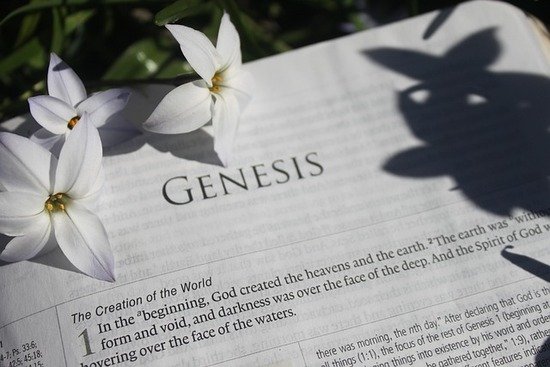
Teachers can use a creationist curriculum, coupled with a study of the Creation story, to establish students in a biblical perspective of our origins.
Study the methods of government in Bible times
While learning about modern types of government, students can also learn about how governments look at various points in Bible history. For example, the special form of government God designed for the Israelites in contrast to those of other nations mentioned in the Bible, such as the Babylonians, Persians, and Romans.
Include the narratives of the Bible in the study of history
We often think of the Bible as a spiritual book, but it’s also a rich repository of ancient history. In fact, the Institute for Creation Research states,
“The Bible has proven to be more historically and archaeologically accurate than any other ancient book. It has been subjected to the minutest scientific textual analysis possible to humanity and has been proven to be authentic in every way.”
So why not use it as a source in your world history curriculum?
A Bible-based education develops individual thinkers
Ellen White summed up her biblical integration ideas in a single quote:
“In [the Bible’s] pages are found history the most ancient; biography the truest to life; principles of government for the control of the state, for the regulation of the household—principles that human wisdom has never equaled.”16
Even if the students aren’t directly participating in Bible study, their teachers can weave those principles into many aspects of the classroom. The Bible can be the standard for testing all other subject matter and activities.
In this way, children carry a solid foundation into adulthood—the ability to think for themselves and evaluate life by the Bible.
- White, Ellen G., Education, p. 13 [↵]
- Ibid. [↵]
- Ibid., p. 30 [↵]
- White, Ellen, Christian Education (International Tract Society, 1894), p. 103 [↵]
- Douglass, Herbert E., Messenger of the Lord, p. 346 [↵]
- Ibid. [↵]
- bid., p. 347 [↵]
- White, Ellen G., Fundamentals of Christian Education, p. 474 [↵]
- Messenger of the Lord, p. 347 [↵]
- Education, p. 17 [↵]
- Knight, George, “The Transformation of Education” in Land, Gary, The World of Ellen White, pp. 162-163 [↵]
- Ibid. [↵]
- Fundamentals of Christian Education, p. 310 [↵]
- Education, p. 146 [↵]
- Ibid. [↵]
- Ibid., p. 125 [↵]
More Answers
Quem Foram os Juízes de Israel no Antigo Testamento?
Quem Foram os Juízes de Israel no Antigo Testamento?Tempos de crise exigem homens e mulheres de ação. Os israelitas, recém-estabelecidos na Terra Prometida, encontraram-se nesses tempos. À medida que nações inimigas atacavam e oprimiam as tribos, eles clamavam a Deus...

¿En qué se diferencian los Adventistas del Séptimo Día de otros protestantes?
¿En qué se diferencian los Adventistas del Séptimo Día de otros protestantes?Como denominación cristiana protestante, la Iglesia Adventista del Séptimo Día considera la Biblia como la regla suprema de fe y a Jesucristo como el único camino a la salvación. Tenemos...
Como os Adventistas do Sétimo Dia São Diferentes de Outros Protestantes?
Como os Adventistas do Sétimo Dia São Diferentes de Outros Protestantes?Como uma denominação cristã protestante, a Igreja Adventista do Sétimo Dia considera a Bíblia como o guia supremo e vê Jesus Cristo como o único caminho para a salvação. Temos algumas diferenças...

O que é ASI (Associação de Empresários e Profissionais Adventistas)?
O que é ASI (Associação de Empresários e Profissionais Adventistas)?ASI, que significa Associação de Empresários e Profissionais Adventistas (tradução adaptada), é uma organização baseada em associação que oferece apoio aos membros adventistas (profissionais...
Jesús y la Mujer en el Pozo: Derribando Barreras
El encuentro de Jesús con la mujer en el pozo revela su sentir por las personas heridas y su deseo de derribar prejuicios. Esta página analiza cómo Jesús se acercó a ella.

Revealing The True Meaning of The Parable of The Rich Man & Lazarus
Learn the real point behind one of Jesus’ most vivid parables.
O que são as Bem-Aventuranças (E o que significam)?
O que são as Bem-Aventuranças (E o que significam)?As Bem-Aventuranças, encontradas no início do Sermão da Montanha de Jesus no Evangelho de Mateus, são o manifesto do reino de Jesus. Elas descrevem a maneira como Seu reino funciona e o que significa ser um de Seus...

Líderes de la iglesia: ¿Cuál es el rol de un pastor Adventista?
Líderes de la iglesia: ¿Cuál es el rol de un pastor Adventista?¿Cuál es el rol de un pastor en la iglesia Adventista? La posición en sí misma, al menos en lo que respecta a una congregación local, no es muy diferente de la de los pastores en otras denominaciones...
ASI ni Nini (Huduma na Viwanda vya Waadventista vya Kibinafsi)?
ASI ni Nini (Huduma na Viwanda vya Waadventista vya Kibinafsi)?ASI, ambayo inayofupisha maneno (Huduma na Viwanda vya Waadventista vya Kibinafsi), ni shirika la uanachama linalotoa msaada kwa wainjilisti wa Kiadventista (wataalamu wa Kanisa la Waadventista wa Sabato...

Ellen White Alisema Nini Kuhusu Unabii wa Nyakati za Mwisho?
Tunaweza kusoma katika Maandiko kuhusu mfululizo wa matukio na dalili zinazoongoza hadi Ujio wa Pili wa Yesu Kristo.

Safari na Utume wa Ellen G. White Ulimwenguni
Safari na Utume wa Ellen G. White UlimwenguniIngawa Ellen White, mwanzilishi mwenza wa Kanisa la Waadventista wa Sabato, anajulikana zaidi kwa huduma yake nchini Marekani, pia alisafiri kwenda nchi nyingine kumi na mbili katika maisha yake—hili lilikuwa jambo kubwa...
Yote Kuhusu Wainjilisti wa Vitabu wa Kiadventista
Kanisa la Waadventista wa Sabato hutumia mbinu mbalimbali kusambaza tumaini la injili duniani.
¿Qué es ASI (Servicios e Industrias de Laicos Adventistas)?
¿Qué es ASI (Servicios e Industrias de Laicos Adventistas)?ASI, que significa Servicios e Industrias de Laicos Adventistas, es una organización basada en membresía que brinda apoyo a los laicos adventistas (profesionales Adventistas del Séptimo Día que no son...
¿Qué dijo Elena G. de White sobre la profecía de los últimos tiempos?
¿Qué dijo Elena G. de White sobre la profecía de los últimos tiempos?Podemos leer en las Escrituras acerca de la serie de eventos y señales que conducen a la segunda venida de Jesucristo. Y suena bastante intenso, por decir lo menos. La naturaleza simbólica del...
O que Ellen White disse sobre a profecia dos tempos finais?
O que Ellen White disse sobre a profecia dos tempos finais?Podemos ler nas Escrituras sobre a série de eventos e sinais que antecedem a segunda vinda de Jesus Cristo. E, para dizer o mínimo, isso soa bastante intenso. A natureza simbólica da linguagem da profecia...

Meaning of the Parable of the Two Sons in Matthew 21
Meaning of the Parable of the Two Sons in Matthew 21The parable of the two sons in Matthew 21:28-32 is about a father who instructs his sons to work in the family vineyard. The first son refuses to work but later has a change of heart and obeys. The second son says...
Viagens e Missão Mundial de Ellen G. White
Viagens e Missão Mundial de Ellen G. WhiteEmbora Ellen White, cofundadora da Igreja Adventista do Sétimo Dia, seja mais conhecida por seu ministério nos Estados Unidos, ela também viajou para outros doze países durante sua vida — uma grande conquista no século XIX,...
Joseph Bates na Nafasi Yake katika Kanisa la Waadventista
Joseph Bates na Nafasi Yake katika Kanisa la WaadventistaJoseph Bates alikuwa baharia aliyegeuka kuwa mhubiri ambaye alijiunga na Harakati ya Miller na kusubiri Ujio wa Pili wa Yesu kutokea mwaka 1844. Licha ya kukatishwa tamaa wakati hili halikutokea, Bates...

Je, Wasabato Husherehekea Sikukuu?
Je, Wasabato Husherehekea Sikukuu?Je unajiuliza ikiwa mwanafunzi mwenzako au mfanyakazi mwenzako Mwadventista husherehekea sikukuu kama wewe? Labda ungependa kumshirikisha kwenye sherehe fulani, lakini pia unataka kuheshimu imani yake. Kwa hiyo, huna uhakika wa jinsi...

O Que a Bíblia Diz Sobre a Segunda Vinda de Jesus Cristo
Curioso para saber o que a Bíblia diz sobre a Segunda Vinda de Jesus Cristo? Vamos abordar os versículos-chave e o que eles significam.

Waadventista Wanaamini Nini Kuhusu Imani na Matendo?
Waadventista Wanaamini Nini Kuhusu Imani na Matendo?Waadventista wanaamini tunaokolewa kwa imani, ambayo ni imani na tumaini tulilonalo kwa Yesu Kristo kutuokoa kutoka dhambini. Yesu, basi, anatupa uwezo wa kuishi kwa utii wa amri za Mungu na kuwahudumia wengine kwa...
Todo sobre los colportores Adventistas del Séptimo Día
Todo sobre los colportores Adventistas del Séptimo DíaLa Iglesia Adventista del Séptimo Día utiliza una variedad de métodos para difundir la esperanza del evangelio al mundo. Una de estas formas es a través del colportaje, también llamado “venta puerta a puerta” o...
Tudo Sobre Colportores Adventistas do Sétimo Dia
A Igreja Adventista do Sétimo Dia usa uma variedade de métodos para espalhar a esperança do evangelho ao mundo.
Los viajes y la misión mundial de Elena G. de White
Los viajes y la misión mundial de Elena G. de WhiteAunque Elena G. de White, cofundadora de la Iglesia Adventista del Séptimo Día, es más conocida por su ministerio en los Estados Unidos, también viajó a otros doce países durante su vida, un gran logro en el siglo XIX...

Mikutano ya Injili ya Waadventista ni Nini?
Kanisa la Waadventista wa Sabato linaweka mkazo mkubwa katika kushiriki injili kupitia uinjilisti, yaani kushiriki injili kupitia mahubiri, mafundisho, na ushuhuda.
Joseph Bates y su papel en la Iglesia Adventista del Séptimo Día
Joseph Bates y su papel en la Iglesia Adventista del Séptimo DíaJoseph Bates fue un marinero que se convirtió en predicador, se unió al Movimiento Millerita y esperó que ocurriera la Segunda Venida de Jesús en 1844. A pesar de sentirse decepcionado cuando esto no...
Joseph Bates e Seu Papel na Igreja Adventista do Sétimo Dia
Joseph Bates foi um marinheiro que se tornou pregador, juntou-se ao Movimento Millerita e esperou pela Segunda Vinda de Jesus em 1844.
¿Los Adventistas del Séptimo Día celebran las fiestas?
¿Los Adventistas del Séptimo Día celebran las fiestas?¿Te preguntas si tu compañero de clase o de trabajo adventista celebra las mismas fiestas que tú? Tal vez quieres incluirlo en algunas festividades, pero también deseas respetar sus creencias. Entonces, no estás...
Os Adventistas do Sétimo Dia Celebram Feriados?
Está se perguntando se seu colega de classe ou de trabalho adventista celebra os mesmos feriados que você?
Didn’t find your answer? Ask us!
We understand your concern of having questions but not knowing who to ask—we’ve felt it ourselves. When you’re ready to learn more about Adventists, send us a question! We know a thing or two about Adventists.