
Jesus and John the Baptist were relatives(Luke 1:36). But the significance of their relationship was far beyond the family tree. They were interconnected in prophecy, ministry, and mission.
Jesus Christ fulfilled Old Testament prophecies when He came to earth as the Messiah. But John the Baptist also had a role. He was the one who set the stage for Jesus’s arrival and prepared people to meet their Savior (Isaiah 40:3-5).
As far as direct interactions go, the Bible only documents a few. But there’s a lot we can learn about how Jesus and John regarded each other as co-laborers for a higher purpose. So let’s look at:
- The family ties of Jesus and John the Baptist
- Their relationship in prophecy
- Their relationship in mission
- Why their relationship is meaningful for us, even today
First, let’s confirm the family roots they had in common.
The family ties of Jesus and John the Baptist
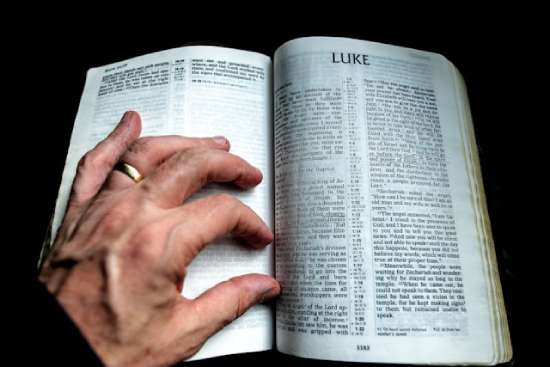
Photo by James Coleman on Unsplash
In Luke 1, we learn that Jesus and John were second cousins and close in age.
Not much else is documented about either of their childhoods, however, so we don’t know how much interaction they had in their younger years. It certainly is possible that they could’ve come in contact when they were growing up. Their families may have gathered together on occasion, or they might’ve seen each other on trips to Jerusalem for annual feast days. We just don’t know for sure.
But quite a bit was written about their births. Jesus and John the Baptist both came from divinely-blessed situations that set them up as significant spiritual figures.
Both of their births were foretold by angels (verses 13-20; 28-38), and both of them were a result of miraculous pregnancies.
Jesus was born to Mary, who was a virgin (verses 27, 34). And Mary’s relatives, Elizabeth, gave birth to John after she was well past childbearing age (verses 7, 36).
Before they were born, they did “meet” once. Mary traveled to visit Elizabeth when they were both pregnant. When she arrived, we’re told that Elizabeth was “filled with the Holy Spirit” and that her “leaped inside her” (verse 41, ESV).
It sounds like the two unborn babies, both destined for world-changing lives, already sensed each other’s presence. They were filled with the Holy Spirit right from the start (verses 15, 35, 41).
The relationship of Jesus and John the Baptist in prophecy
As we learned from their birth experiences, both Jesus and John the Baptist were prophetically linked. We see this in the prophecies that predict Jesus’ arrival as humanity’s Messiah, Savior, and sacrificial Lamb.
According to Matthew 3:3 and John 1:23, John the Baptist fulfilled Isaiah’s prophecy as “the voice of one crying out: Prepare the way of the Lord in the wilderness; make a straight highway for our God in the desert” (Isaiah 40:3, CSB)
So John’s foretold purpose was to inform and prepare people before Jesus showed up.
That might sound like a simple job, but considering the nature of humanity, it would be much needed. It’s likely that the people of John’s time had grown spiritually complacent, especially after being ruled by other nations for so long. So John’s objective was to remind the people about the prophesied Messiah and renew their hope. He called for everyone to believe, get baptized, and change their lives for the better “because the kingdom of heaven has come near!” (Matthew 3:2, CSB).
The prophet Malachi also gave John a description similar to Isaiah’s:
“Behold, I send My messenger, and he will prepare the way before Me. And the Lord, whom you seek, will suddenly come to His temple, even the Messenger of the covenant, in whom you delight. Behold, He is coming” (Malachi 3:1, NKJV).
Again, John is foretold to go ahead of Jesus and to be a messenger who lays the groundwork for His earthly ministry.
Prophecy also connects John the Baptist with the prophet Elijah, who had a close relationship with God and was also on a mission to help Israel repent from the influence of corrupted leadership (1 Kings 17–2 Kings 2). In Matthew 11:13-14, Jesus refers to John as “the Elijah” from prophecy:
“For all the prophets and the law prophesied until John. And if you’re willing to accept it, he is the Elijah who is to come” (CSB).
We can look back in the book of Malachi to find:
“Behold, I will send you Elijah the prophet before the great and awesome day of the Lord comes. And he will turn the hearts of the fathers to their children, and the hearts of the children to their fathers” (Malachi 4:5-6, ESV).
That same verse is referenced when the angel tells John’s father, Zacharias—or Zechariah, that he and Elizabeth will have a son:
“And he will go before Him in the spirit and power of Elijah, to turn the hearts of fathers to their children, and the disobedient to the understanding of the righteous, to make ready for the Lord a prepared people” (Luke 1:17, CSB).
So John the Baptist was linked to Jesus not just by a blood relationship, but through prophecy. And “in the spirit and power of Elijah,” John indeed fulfilled his predicted role of turning people’s hearts toward their Savior.
This gives us the framework for understanding how Jesus and John were so closely related in mission. Both their ministries were about restoring humanity’s hope—and helping them understand where (or through Whom) that hope comes from.
The relationship of Jesus and John the Baptist in mission

Photo by Pixabay
Now we get to look at how Jesus and John were united in the fulfillment of messianic prophecy. John’s ministry (messenger/preparer) complemented Jesus’ ministry (Messiah/Savior).
John was the forerunner. The primer. The stage setter. He helped re-establish people’s faith in their Redeemer so they could be ready to receive Him.
We can see John’s love and respect for Jesus in how seriously he took his role—it governed his whole life. He lived away from society, survived on locusts and honey, and dressed in camel hair and a leather belt (Matthew 3:4; Mark 1:6, and like Elijah in 2 Kings 1:8). His days were spent preaching and baptizing at the Jordan River (Mark 1:5; Luke 3:3), and also in Aenon (John 3:23).
And people came in droves to hear him. We read that “Jerusalem, all Judea, and all the region around the Jordan went out to him and were baptized by him in the Jordan, confessing their sins” (Matthew 3:5-6, NKJV).
Yet even with this important role and a throng of followers, John did not become proud. He knew his place. And he made sure the people understood his place, too:
“He proclaimed, ‘One who is more powerful than I am is coming after me. I am not worthy to stoop down and untie the strap of His sandals’” (Mark 1:7, CSB).
At one point, he even had to remind his own disciples that his whole purpose was to point to Jesus, not to gain authority or influence for himself.
“So they came to John and told him, ‘Rabbi, the one you testified about, and who was with you across the Jordan, is baptizing—and everyone is going to Him.’ John responded … You yourselves can testify that I said, “I am not the Messiah, but I’ve been sent ahead of Him.” … He must increase, but I must decrease’” (John 3:26-30, CSB).
John also understood that his mission for Jesus could be upsetting to the established religious leaders. Most of them were fixated on their heritage instead of maintaining loving, repentant hearts. Like Jesus, it would eventually cost John his life as a result of speaking truth to those in power.
But John’s message to these leaders highlighted some key aspects of Jesus’ ultimate mission for humanity.
“But when he saw many of the Pharisees and Sadducees coming to his baptism, he said to them, ‘Brood of vipers! Who warned you to flee from the coming wrath? Therefore produce fruit consistent with repentance. And don’t presume to say to yourselves, “We have Abraham as our father.” For I tell you that God is able to raise up children for Abraham from these stones’” (Matthew 3:7-9, CSB).
He wanted to make it clear to these pious religious leaders that, despite their lineage from Abraham, they had become an opposing force to the plan of salvation. And if they didn’t repent, they would be judged accordingly. He also pointed out that only Jesus is worthy and able to judge people’s hearts. Jesus is the one they should pay attention to.
“The ax is already at the root of the trees. Therefore, every tree that doesn’t produce good fruit will be cut down and thrown into the fire. I baptize you with water for repentance … He Himself will baptize you with the Holy Spirit and fire” (Matthew 3:10-11, CSB).
John was giving the Pharisees and Sadducees a wake-up call by comparing them to a tree bearing bad fruit, meaning they needed to change their self-serving ways. He was hoping to prepare them to receive Jesus and the purifying work of the Holy Spirit.
So John and Jesus went about their missions with clear awareness and acknowledgment of what the other was doing. But as for face-to-face interactions between the two, the only one recorded in Scripture is when Jesus approaches John for baptism (Matthew 3:13-17; Mark 1:7-11; Luke 3:21-22; John 1:26-37).
And this interaction happened to be an incredibly significant moment. John’s mission to preach about the Coming messiah was reaching its completion—just as Jesus’ public ministry as the Messiah was beginning.
John was initially surprised at Jesus’ request to be baptized by him. But Jesus affirmed John’s role as His forerunner and the initiator of His earthly ministry. “This is the way to fulfill all righteousness” (Matthew 3:15, CSB).
When Jesus came up out of the water from His baptism, a voice from heaven pronounced that He was indeed the Son of God, doing exactly what He was meant to do (Matthew 3:16-17).
John’s mission paved the way for Jesus to do His.
Why is Jesus’s relationship with John the Baptist important?
The story of Jesus and John reminds us that:
- Any person can be used by God for important things
- Serving God isn’t always easy
- Jesus is there for us, even when we’re having a hard time
While John the Baptist got to herald the arrival of Jesus Christ Himself, he’s not the only person in the Bible to serve as a messenger. He shares this role with other prophets like Noah, Jonah, Elijah, and Samuel. Throughout the Bible, we can see how God frequently used ordinary individuals as messengers to prepare people for a major event.
We can also be messengers for God, even today. And we can learn a lot from John’s life and his relationship with Jesus.

Image by simone gatterwe from Pixabay
Near the end of his life, John grew discouraged. He’d spoken out against powerful men and ended up in prison.
While locked away, John started to doubt if he’d done things right. Was this how things were supposed to work out? Announce the coming Messiah…and then get arrested and sentenced to death?
Even this great messenger had his low points. He felt the need to send a couple of his disciples to find Jesus and ask Him, “Are You the Coming One, or do we look for another?” (Matthew 11:2-3, NKJV).
But Jesus sent encouraging words back to John (much like He did for Elijah in 1 Kings 19:13-18).
“The blind are made to see. Those who could not walk are walking. Those who have had bad skin diseases are healed. Those who could not hear are hearing. The dead are raised up to life and the Good News is preached to poor people. He is happy who is not ashamed of me and does not turn away because of Me” (Matthew 11:5-6, NASB).
Jesus assured John that even though he wasn’t able to see it at that moment, miraculous things were happening. The Gospel was spreading. Their mission was being accomplished.
Jesus even said about John, “Assuredly, I say to you, among those born of women there has not risen one greater than John the Baptist” (Matthew 11:11, NKJV).
So when we’re going about our lives and sharing the love of God, we might also encounter hardship or opposition.
Now, this doesn’t mean we’re all destined to confront government officials and get thrown into prison. But being a representative of God in a world that can be uncaring and shallow…it will get hard sometimes.
So it can be easy to doubt if we’re on the right track, or if God really can use us to make good things happen.
But God alone sees the big picture. Our job is to yield to Him who does the real work of healing, forgiving, judging, and saving. As long as we aspire to live loving lives as His messengers, and as long as we make ourselves open to His Holy Spirit’s leading, we are indeed on the right track.
The call to be a messenger of the Gospel was given to all of us (Matthew 28:19-20; Acts 1:8; 1 Peter 3:15). Jesus will return one day soon (John 14:1-3), and we can share this Good News with a broken, disheartened world. By our words and actions, we can also turn people’s hearts toward Jesus—the One who sees all, loves all, and wants to save all.
Related Articles.



More Answers

Quem Foram os Juízes de Israel no Antigo Testamento?
Quem Foram os Juízes de Israel no Antigo Testamento?Tempos de crise exigem homens e mulheres de ação. Os israelitas, recém-estabelecidos na Terra Prometida, encontraram-se nesses tempos. À medida que nações inimigas atacavam e oprimiam as tribos, eles clamavam a Deus...

¿En qué se diferencian los Adventistas del Séptimo Día de otros protestantes?
¿En qué se diferencian los Adventistas del Séptimo Día de otros protestantes?Como denominación cristiana protestante, la Iglesia Adventista del Séptimo Día considera la Biblia como la regla suprema de fe y a Jesucristo como el único camino a la salvación. Tenemos...
Como os Adventistas do Sétimo Dia São Diferentes de Outros Protestantes?
Como os Adventistas do Sétimo Dia São Diferentes de Outros Protestantes?Como uma denominação cristã protestante, a Igreja Adventista do Sétimo Dia considera a Bíblia como o guia supremo e vê Jesus Cristo como o único caminho para a salvação. Temos algumas diferenças...

O que é ASI (Associação de Empresários e Profissionais Adventistas)?
O que é ASI (Associação de Empresários e Profissionais Adventistas)?ASI, que significa Associação de Empresários e Profissionais Adventistas (tradução adaptada), é uma organização baseada em associação que oferece apoio aos membros adventistas (profissionais...
Jesús y la Mujer en el Pozo: Derribando Barreras
El encuentro de Jesús con la mujer en el pozo revela su sentir por las personas heridas y su deseo de derribar prejuicios. Esta página analiza cómo Jesús se acercó a ella.

Revealing The True Meaning of The Parable of The Rich Man & Lazarus
Learn the real point behind one of Jesus’ most vivid parables.
O que são as Bem-Aventuranças (E o que significam)?
O que são as Bem-Aventuranças (E o que significam)?As Bem-Aventuranças, encontradas no início do Sermão da Montanha de Jesus no Evangelho de Mateus, são o manifesto do reino de Jesus. Elas descrevem a maneira como Seu reino funciona e o que significa ser um de Seus...

Líderes de la iglesia: ¿Cuál es el rol de un pastor Adventista?
Líderes de la iglesia: ¿Cuál es el rol de un pastor Adventista?¿Cuál es el rol de un pastor en la iglesia Adventista? La posición en sí misma, al menos en lo que respecta a una congregación local, no es muy diferente de la de los pastores en otras denominaciones...
ASI ni Nini (Huduma na Viwanda vya Waadventista vya Kibinafsi)?
ASI ni Nini (Huduma na Viwanda vya Waadventista vya Kibinafsi)?ASI, ambayo inayofupisha maneno (Huduma na Viwanda vya Waadventista vya Kibinafsi), ni shirika la uanachama linalotoa msaada kwa wainjilisti wa Kiadventista (wataalamu wa Kanisa la Waadventista wa Sabato...

Ellen White Alisema Nini Kuhusu Unabii wa Nyakati za Mwisho?
Tunaweza kusoma katika Maandiko kuhusu mfululizo wa matukio na dalili zinazoongoza hadi Ujio wa Pili wa Yesu Kristo.

Safari na Utume wa Ellen G. White Ulimwenguni
Safari na Utume wa Ellen G. White UlimwenguniIngawa Ellen White, mwanzilishi mwenza wa Kanisa la Waadventista wa Sabato, anajulikana zaidi kwa huduma yake nchini Marekani, pia alisafiri kwenda nchi nyingine kumi na mbili katika maisha yake—hili lilikuwa jambo kubwa...

Yote Kuhusu Wainjilisti wa Vitabu wa Kiadventista
Kanisa la Waadventista wa Sabato hutumia mbinu mbalimbali kusambaza tumaini la injili duniani.
¿Qué es ASI (Servicios e Industrias de Laicos Adventistas)?
¿Qué es ASI (Servicios e Industrias de Laicos Adventistas)?ASI, que significa Servicios e Industrias de Laicos Adventistas, es una organización basada en membresía que brinda apoyo a los laicos adventistas (profesionales Adventistas del Séptimo Día que no son...
¿Qué dijo Elena G. de White sobre la profecía de los últimos tiempos?
¿Qué dijo Elena G. de White sobre la profecía de los últimos tiempos?Podemos leer en las Escrituras acerca de la serie de eventos y señales que conducen a la segunda venida de Jesucristo. Y suena bastante intenso, por decir lo menos. La naturaleza simbólica del...
O que Ellen White disse sobre a profecia dos tempos finais?
O que Ellen White disse sobre a profecia dos tempos finais?Podemos ler nas Escrituras sobre a série de eventos e sinais que antecedem a segunda vinda de Jesus Cristo. E, para dizer o mínimo, isso soa bastante intenso. A natureza simbólica da linguagem da profecia...

Meaning of the Parable of the Two Sons in Matthew 21
Meaning of the Parable of the Two Sons in Matthew 21The parable of the two sons in Matthew 21:28-32 is about a father who instructs his sons to work in the family vineyard. The first son refuses to work but later has a change of heart and obeys. The second son says...
Viagens e Missão Mundial de Ellen G. White
Viagens e Missão Mundial de Ellen G. WhiteEmbora Ellen White, cofundadora da Igreja Adventista do Sétimo Dia, seja mais conhecida por seu ministério nos Estados Unidos, ela também viajou para outros doze países durante sua vida — uma grande conquista no século XIX,...

Joseph Bates na Nafasi Yake katika Kanisa la Waadventista
Joseph Bates na Nafasi Yake katika Kanisa la WaadventistaJoseph Bates alikuwa baharia aliyegeuka kuwa mhubiri ambaye alijiunga na Harakati ya Miller na kusubiri Ujio wa Pili wa Yesu kutokea mwaka 1844. Licha ya kukatishwa tamaa wakati hili halikutokea, Bates...

Je, Wasabato Husherehekea Sikukuu?
Je, Wasabato Husherehekea Sikukuu?Je unajiuliza ikiwa mwanafunzi mwenzako au mfanyakazi mwenzako Mwadventista husherehekea sikukuu kama wewe? Labda ungependa kumshirikisha kwenye sherehe fulani, lakini pia unataka kuheshimu imani yake. Kwa hiyo, huna uhakika wa jinsi...

O Que a Bíblia Diz Sobre a Segunda Vinda de Jesus Cristo
Curioso para saber o que a Bíblia diz sobre a Segunda Vinda de Jesus Cristo? Vamos abordar os versículos-chave e o que eles significam.

Waadventista Wanaamini Nini Kuhusu Imani na Matendo?
Waadventista Wanaamini Nini Kuhusu Imani na Matendo?Waadventista wanaamini tunaokolewa kwa imani, ambayo ni imani na tumaini tulilonalo kwa Yesu Kristo kutuokoa kutoka dhambini. Yesu, basi, anatupa uwezo wa kuishi kwa utii wa amri za Mungu na kuwahudumia wengine kwa...
Todo sobre los colportores Adventistas del Séptimo Día
Todo sobre los colportores Adventistas del Séptimo DíaLa Iglesia Adventista del Séptimo Día utiliza una variedad de métodos para difundir la esperanza del evangelio al mundo. Una de estas formas es a través del colportaje, también llamado “venta puerta a puerta” o...
Tudo Sobre Colportores Adventistas do Sétimo Dia
A Igreja Adventista do Sétimo Dia usa uma variedade de métodos para espalhar a esperança do evangelho ao mundo.
Los viajes y la misión mundial de Elena G. de White
Los viajes y la misión mundial de Elena G. de WhiteAunque Elena G. de White, cofundadora de la Iglesia Adventista del Séptimo Día, es más conocida por su ministerio en los Estados Unidos, también viajó a otros doce países durante su vida, un gran logro en el siglo XIX...

Mikutano ya Injili ya Waadventista ni Nini?
Kanisa la Waadventista wa Sabato linaweka mkazo mkubwa katika kushiriki injili kupitia uinjilisti, yaani kushiriki injili kupitia mahubiri, mafundisho, na ushuhuda.
Joseph Bates y su papel en la Iglesia Adventista del Séptimo Día
Joseph Bates y su papel en la Iglesia Adventista del Séptimo DíaJoseph Bates fue un marinero que se convirtió en predicador, se unió al Movimiento Millerita y esperó que ocurriera la Segunda Venida de Jesús en 1844. A pesar de sentirse decepcionado cuando esto no...
Joseph Bates e Seu Papel na Igreja Adventista do Sétimo Dia
Joseph Bates foi um marinheiro que se tornou pregador, juntou-se ao Movimento Millerita e esperou pela Segunda Vinda de Jesus em 1844.
¿Los Adventistas del Séptimo Día celebran las fiestas?
¿Los Adventistas del Séptimo Día celebran las fiestas?¿Te preguntas si tu compañero de clase o de trabajo adventista celebra las mismas fiestas que tú? Tal vez quieres incluirlo en algunas festividades, pero también deseas respetar sus creencias. Entonces, no estás...
Os Adventistas do Sétimo Dia Celebram Feriados?
Está se perguntando se seu colega de classe ou de trabalho adventista celebra os mesmos feriados que você?
Didn’t find your answer? Ask us!
We understand your concern of having questions but not knowing who to ask—we’ve felt it ourselves. When you’re ready to learn more about Adventists, send us a question! We know a thing or two about Adventists.