
So what’s behind the similarity—and the key difference—between a “son of man” in the Old Testament and the “Son of Man” in the New Testament?
The Bible has numerous names for Jesus: Son of God, Prince of Peace, Lamb of God, and King of Kings (and that’s just naming a few). But even with all these names, “Son of Man,” seems to be Jesus’ favorite nickname. He uses it to refer to Himself over 80 times in the Bible.1
So what did Jesus mean by calling Himself this? What does this self-designation say about Him?
Find out as we take a deep dive into:
- What “son of man” means in the Bible
- What prophecy can tell us about the “Son of Man”
- What this title tells us about Jesus
- The Son of Man’s role as judge and intercessor
Let’s start by looking more closely at how this title is used throughout the Bible.
Bible verses that tell us about the Son of Man:
- The humility of the Son of Man: Matthew 8:20
- The suffering of the Son of Man: Matthew 12:40; Mark 8:31; Matthew 17:22; Luke 24:6-7; Matthew 20:18-19; Luke 9:22; Mark 14:21; Matthew 17:9; Matthew 17:12; Matthew 26:2; Matthew 26:45, Mark 9:12
- The service of the Son of Man: Luke 19:10; Mark 10:45; John 6:27; John 6:53; Matthew 13:37; Matthew 20:28
- The authority of the Son of Man: Luke 5:24; John 5:19; Luke 6:5; Psalm 80:17; Matthew 9:6; Mark 2:10; Luke 22:69; John 6:27; John 8:28
- The divinity of the Son of Man: John 3:13; John 6:62
- The promised rule of the Son of Man: Daniel 7:13-14; Mark 14:62; Matthew 26:64; Matthew 19:28; Matthew 25:31; Acts 7:56; Luke 18:31; Mark 14:62; Luke 22:69; Matthew 13:41; Matthew 16:13-16
- The judgment of the Son of Man: John 5:27; Revelation 14:14; Matthew 24:30; Matthew 24:26-27; Luke 21:27; Matthew 16:27; Matthew 19:28; Mark 13:26; Revelation 14:14-16
What does “son of man” mean in the Bible?

Photo by Gift Habeshaw on Unsplash
In the Old Testament, when the Bible refers to a “son of man” it’s usually referring to a human being (Job 25:6; 35:8; Psalm 8:4; 146:3; Isaiah 51:12). We first come across the designation in Numbers 23:19:
“God is not a man, that He might lie, or a son of man, that He might change His mind. Does He speak and not act, or promise and not fulfill” (CSB)?
This verse makes a distinction between God and humans, so a “son of man” would be any fallen human person in contrast to a perfect God.
We also see this title used directly to a specific human person. God repeatedly addresses the prophet Ezekiel as a “son of man” (Ezekiel 2:1).
The Hebrew word that is translated to create the English phrase “son of man” in Ezekiel is ben -‘adam,2 which is similar to saying “of Adam.” Ezekiel is also called by the Hebrew word ’enosh (’enash in Aramaic), which is typically used to refer to humans in general.
So the purpose of using this designation emphasizes the status of a person’s humanity, noting the weaknesses and helplessness that come with being human.3
But there is one instance later on in the Old Testament where the phrase “son of man” (not capitalized) does not seem to refer to any old human being. We can find this in a Messianic prophecy in Daniel 7 when the text refers to keber ’enash, or “one like a son of man,” who Bible scholars believe to be Jesus (verse 13, CSB).4
The other times we see “Son of Man” referring to a specific person and not emphasizing fallen human characteristics is in the New Testament, using the Greek phrase huios anthrōpos.5 This is the phrase Jesus used (capitalized) to refer to Himself during His earthly ministry. It’s also used to describe Him in Acts 7:56, Revelation 1:13, and Revelation 14:14.
So what’s the meaning behind the two very different uses of the phrase “son of man”?
Let’s first look more closely at the Messianic prophecy in the book of Daniel, as well as some other prophetic passages that use this title.
What prophecy tell us about “the Son of Man”
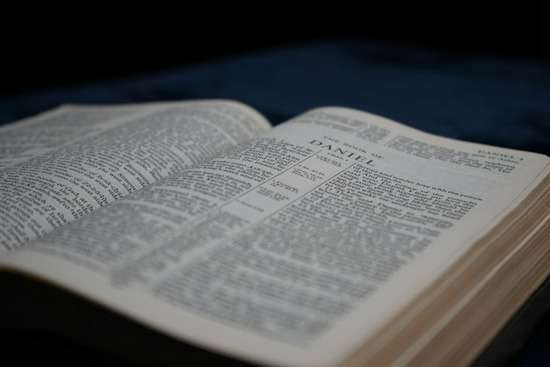
Photo by Ben Burkhardt on Unsplash
Daniel 7:13 is the first use of “son of man” to describe divine, rather than human, characteristics. This special figure is mentioned in a vision given to the prophet Daniel.
This vision involved four strange beasts, each representing a powerful nation that would, at one point, be the predominant world power (Daniel 7:17).
But when Daniel is shown the final beast, he watches as it’s destroyed and its reign of power comes to an end (Daniel 7:7-11). In its place, someone “like a son of man” arrives on the clouds of heaven to assume eternal rule of the earth (Daniel 7:13-14). This authority to rule earth is given to this “son of man” by the Ancient of Days, otherwise known as the Most High, or God the Father.6
This scene described in Daniel’s vision aligns with other Scriptural descriptions of Christ’s Second Coming, which can be found in Mark 13:26; Matthew 25:31; 1 Thessalonians 4:16-17; Revelation 1:7.
What’s more, Jesus references this prophecy as He’s on trial before Jewish leaders shortly before His death on the Cross. He said:
“‘It is as you said. Nevertheless, I say to you, hereafter you will see the Son of Man sitting at the right hand of the Power, and coming on the clouds of heaven’” (Matthew 26:64, NKJV).
Jesus publicly claims to be the Son of Man spoken of in the prophecy, the one who will gain eternal rule over the earth.
In response to this claim, the Jewish religious leaders, the chief priests, and the high priest became angry. They refused to believe that Jesus had this divinity and prophetic significance, so they accused Him of blasphemy, or trying to assume the authority of God (Matthew 26:65).
So the Jews must have already believed that the “Son of Man” in prophecy referred to God in some way, or this claim wouldn’t have gotten them so riled up.
We also see the “Son of Man” identity for Jesus show up in Revelation 1, when John describes a vision of “one like the Son of Man” (verse 13), who was dead but was resurrected, is “the First and the Last, and the Living One,” and holds the keys to eternal life (verses 17-18, CSB). Which describes Jesus perfectly.7
But what does Daniel 7 mean when it talks about Jesus ruling eternally over earth? Wouldn’t He already have control of this world as the Son of God?
Let’s rewind to Genesis. Back to the very first prophecy to reference Jesus Christ and His role in humanity’s salvation.
God made the world for humanity. Earth wasn’t just for them to dwell upon— God gave it to them to have dominion over (Genesis 1:27-28). But when Adam and Eve yielded to sin, they forfeited their rule. In listening to Satan, who appeared in the form of a serpent, they lost their dominion to him (Luke 4:5-6).8
And with Satan’s dominion came the kind of world we see today—one fueled by selfishness, power struggles, pain, and confusion.
But God didn’t abandon Adam and Eve to the ultimate fate of their actions. Ever a merciful Creator, God wanted to give Adam and Eve (and all of humanity) an opportunity for salvation from this sin-corrupted existence.
So God issued the first-ever Messianic prophecy, speaking of a savior that would come to earth, walk among us, and provide a way to deliver us from sin.
He tells the serpent:
“And I will put enmity
Between you and the woman,
And between your seed and her Seed;
He shall bruise your head,
And you shall bruise His heel” (Genesis 3:15, NKJV).
This passage predicted that humanity’s Messiah would come out of humanity’s seed, to be a human descendent, from the line started by Adam and Eve.
This human savior would be none other than Jesus, the Son of God given human form, born to a human woman named Mary to become the (capitalized) “Son of Man.”9
So Jesus died on the Cross as a sacrifice for our sins. And through this perfect sacrifice, with the perfect, sinless life He led, God gave Him ultimate dominion over the earth (Ephesians 1:20-21).
What does the title “Son of Man” tell us about Jesus?

Photo by Rodolfo Clix
The title “Son of Man” reveals the special relationship between Jesus and humanity. Instead of an ordinary, sin-corrupted “son of man,” like any of us, Jesus, became the “Son of Man,” living in our sinful world as a human—but one who resisted falling into sin. And in doing this, He became humanity’s promised redeemer and demonstrated how to live a life of love.
And as the Son of Man, Jesus demonstrated His power to forgive sin:
“‘But that you may know that the Son of Man has power on earth to forgive sins’—He said to the man who was paralyzed, ‘I say to you, arise, take up your bed, and go to your house’” (Luke 5:24, NKJV).
He also showed that his role as the Son of Man means He wants everyone to understand what it means to live a sin-free life:
“‘I tell you that something greater than the temple is here. If you had known what these words mean, ‘I desire mercy, not sacrifice,’ you would not have condemned the innocent. For the Son of Man is Lord of the Sabbath” (Matthew 12:6-8, CSB).
Jesus’ claim to be the Lord of the Sabbath further verifies His authority as God, the creator of the Sabbath.
Our Lord Jesus is indeed the king who will one day reign over the New Earth—and who we can invite to reign over and shape our lives when we accept Him as our Savior.
And the beauty of this title, “Son of Man,” reminds us that Jesus is not just a king. He isn’t distant and wrapped up in His own greatness like many fallen human kings throughout history. Instead, He’s our Savior who intimately understands us. He’s gone through the same kinds of things we have (Hebrews 4:15), and is interested in having a personal relationship with us.
Jesus invites each of us to come to Him and share our burdens and joys with Him like we would a friend—because that’s who He is (Matthew 11:28; John 15:12-15).
His earthly ministry, His death, and His resurrection allow us to see that the Son of Man is not a king who rules at a distance, but one who acts as a servant-leader, reaching people where they’re at.10 Jesus didn’t shy away from all the ugliness and pain humanity faced. He was born right into the thick of it.
He came with the intention of loving others and helping them rebuild the connection they’d once had with God. To accomplish this, He was even willing to face the humiliation and pain of the Cross (Philippians 2:8).
But despite all the difficulties that came with being a human, Jesus didn’t mind being identified as one.
If the number of times Jesus called Himself the “Son of Man,” a title associated with being a human, is any indication, Jesus truly values the humanity He took on for the way it has brought Him closer to us.
It was, after all, Jesus’ experience as a human that enabled Him to become the perfect candidate for building the bridge between humanity and God (Hebrews 2:17).
The judgment and intercession of the Son of Man

Photo by Wesley Tingey on Unsplash
As the Son of Man, Jesus has the authority to judge the world (John 5:27; Matthew 16:27).
Scripture shows us how Jesus is currently performing this role. It reveals that, until He returns, He ministers in the heavenly sanctuary, going through every moment with us, searching our hearts, hearing our prayers, and following our thoughts and actions. It only makes sense for the judge of all humanity to be the God who knows us fully, inside and out (2 Corinthians 5:10; Hebrews 4:14).
The concept of judgment, unfortunately, has been twisted by sin and tainted by our human methods of judgment. After all, no one really looks forward to facing a judge in a courtroom. It’s so easy to worry that something won’t work out fairly, or that the judge won’t understand your situation, or that the opposing side will say something untrue or inaccurate about you.
But we don’t have to fear the judgment of Jesus like we would a human legal system. He is the most fair judge there could possibly be. He knows what it’s like to be human because He became human Himself.
While Adam and Eve led humanity into sin, the apostle Paul re-emphasizes Jesus’ role as the Son of Man, the second Adam (1 Corinthians 15:45), who intercedes on our behalf to save us from sin and repair our relationship with God.
While there’s nothing we can do to acquit ourselves, Jesus offers to deliver us from sin and its destructive consequences. He died for us, as a son of man, so we wouldn’t have to die for our sins (Hebrews 2:17). And, in facing every temptation we’ve faced, He can serve as our High Priest, fully prepared to help us resist temptation and choose a better way of life (Hebrews 4:15).
The Son of God became the Son of Man because He cares about us more than we could ever imagine. Jesus went through all He did so we can still have the opportunity to live with Him for eternity (John 15:13; 1 Thessalonians 5:10).
Now that we’ve learned about Jesus’ role as the Son of Man,
Related Articles.



- “Lesson 2: The Son,” General Conference of Seventh-day Adventists, p.15. [↵]
- Nichol, F.D., Seventh-day Adventist Bible Commentary And Bible Students’ Source Book Volume 4, Seventh-day Adventist Church, 1977, p.580. [↵]
- Ibid. [↵]
- Nichol, Seventh-day Adventist Bible Commentary And Bible Students’ Source Book Volume 4, p. 829. [↵]
- Strong, James LL.D, S.T.D., The Strongest Strong’s Exhaustive Concordance of the Bible, Zondervan, 2001, pp. 1592,1650. [↵]
- Daniel 7:14; John 5:19; Psalm 80:17. [↵]
- Revelation 1:13-18; Romans 10:9; John 3:16. [↵]
- Nichol, F.D., Seventh-day Adventist Bible Commentary And Bible Students’ Source Book Volume 1, Seventh-day Adventist Church, 1978, p.232-233. [↵]
- Romans 8:3; John 3:16; Philippians 2:5-8. [↵]
- John 13:1-5; Mark 1:40-42; Luke 5:27-32. [↵]
More Answers

The Barren Fig Tree Parable: What It Means to Bear Fruit
Find out what the Parable of the Barren Fig Tree really means.

¿Qué son las reuniones evangelísticas adventistas?
¿Qué son las reuniones evangelísticas adventistas?La Iglesia Adventista del Séptimo Día pone un gran énfasis en compartir el evangelio mediante la evangelización, o compartir el evangelio a través de la predicación, la enseñanza y el testimonio. Una de las formas en...
O que são os Encontros Evangelísticos Adventistas?
O que são os Encontros Evangelísticos Adventistas?A Igreja Adventista do Sétimo Dia dá grande ênfase ao compartilhamento do evangelho por meio da evangelização, ou seja, compartilhar o evangelho através da pregação, ensino e testemunho. Uma das formas de realizarmos...

O Que os Adventistas Acreditam Sobre Fé e Obras?
O Que os Adventistas Acreditam Sobre Fé e Obras?Os adventistas acreditam que somos salvos pela fé, que é a crença e confiança que temos em Jesus Cristo para nos salvar dos nossos pecados. Jesus, então, nos capacita a viver em harmonia com os mandamentos de Deus e a...
¿Qué creen los Adventistas sobre la fe y las obras?
¿Qué creen los Adventistas sobre la fe y las obras?Los adventistas creen que somos salvos por la fe, que es la creencia y confianza que tenemos en Jesucristo para salvarnos de nuestros pecados. Jesús, entonces, nos capacita para vivir en armonía con los mandamientos...

Je, Ninahitaji Kuwa Mwadventista Ili Niokolewe
Je, Ninahitaji Kuwa Mwadventista Ili Niokolewe?Jibu la swali hili ni rahisi, “hapana.” Linapokuja swala la wokovu katika Yesu Kristo, kinachohitajika kwa mtu ni kukiri dhabihu ya Yesu kwa ajili yetu, kuamini kwamba Ametuokoa, na kudai zawadi ya bure ya wokovu ambayo...
¿Necesito ser adventista para ser salvo?
¿Necesito ser adventista para ser salvo?La respuesta a esta pregunta es simplemente, “no.” Cuando se trata de la salvación en Jesucristo, todo lo que se requiere de una persona es reconocer el sacrificio de Jesús por nosotros, creer que Él nos ha salvado y reclamar el...
Preciso ser Adventista para ser salvo?
A resposta para essa pergunta é simplesmente: “não.”

Lo que la Biblia dice sobre la Segunda Venida de Jesucristo
¿Tienes curiosidad sobre lo que la Biblia dice acerca de la Segunda Venida de Jesucristo? Cubriremos los versículos clave y su significado.

¿Quién fue Mateo, el apóstol, en la Biblia?
En el primer libro del Nuevo Testamento, encontramos la historia del Evangelio desde la perspectiva de Mateo.

2 Corinthians: An Overview of Paul’s Most Personal Letter
Discover Paul’s lessons on forgiveness, reconciliation, generosity, and more. It’s all in the book of 2 Corinthians!
Quem Foi Mateus, o Apóstolo, na Bíblia?
Quem Foi Mateus, o Apóstolo, na Bíblia?No primeiro livro do Novo Testamento, encontramos a história do Evangelho sob a perspectiva de Mateus. Ele era um coletor de impostos judeu de Cafarnaum, no primeiro século d.C., e provavelmente era desprezado pelos outros judeus...

The Pharisee and the Tax Collector Parable: Its Meaning Made Simple
The Meaning of the Pharisee and the Tax Collector ParableIn Luke 18:9-14, Jesus told a parable about two men who went to the temple to pray. One was a Pharisee and the other a tax collector. The Pharisee prayed (well, bragged) about his own good works compared to the...
Biblia Inasema Nini Kuhusu Ujio wa Pili wa Yesu Kristo
Unajuliza Biblia inasema nini kuhusu Kurudi kwa Yesu Kristo Mara ya Pili? Tutajadili aya kuu na maana zake.

The Story of the Widow’s Mite—What It Really Means
The Story of the Widow’s Mite—What It Really MeansPeople often assume bigger is better, but the Bible turns this concept on its head with the story of the Widow’s Mite. Of all the donations Jesus sees at the temple, the gift that draws His attention is not the...

Consejo de Elena G. de White sobre la Educación Universitaria
Consejo de Elena G. de White sobre la Educación UniversitariaElena G. de White, una cofundadora importante del Adventismo, es conocida a menudo por su orientación práctica y espiritual para la educación infantil adecuada. Pero también estuvo significativamente...
Mathayo Alikuwa Nani Katika Biblia?
Mathayo Alikuwa Nani Katika Biblia?Katika kitabu cha kwanza cha Agano Jipya, tunapata simulizi la Injili kutoka kwa Mathayo. Alikuwa mtoza ushuru Myahudi kutoka Kapernaumu katika karne ya kwanza MK, na huenda alichukiwa na Wayahudi wenzake kwa kuchagua kazi hiyo....

¿Cuáles son los beneficios de vivir en el campo?
¿Cuáles son los beneficios de vivir en el campo?Visitar el campo puede ofrecer un descanso muy necesario del típico ajetreo y bullicio de la ciudad. Muchos incluso han decidido mudarse a zonas rurales para disfrutar de un ritmo más lento, espacios amplios, aire...
Quais São os Benefícios de Viver no Campo?
Visitar o campo pode oferecer uma pausa muito necessária do típico agito da cidade.

¿Qué significa la parábola de la perla de gran precio?
Esto es lo que Jesús enseñó sobre el reino de los cielos a través de esta breve parábola sobre un comerciante que encuentra una perla invaluable.
O Que Significa a Parábola da Pérola de Grande Valor?
Aqui está o que Jesus ensinou sobre o reino dos céus por meio desta parábola curta sobre um comerciante que encontra uma pérola inestimável.

Por Que Muitos Adventistas Querem Viver no Campo
Por Que Muitos Adventistas Querem Viver no CampoViver em áreas rurais é algo que os adventistas têm valorizado historicamente, embora as necessidades da vida moderna nem sempre tenham tornado isso possível. Convenhamos, as vantagens da vida na cidade são bastante...

Uma Visão Geral de Romanos: Fé, Justiça, Relacionamentos
Uma Visão Geral de Romanos: Fé, Justiça, RelacionamentosO livro de Romanos é uma das 21 epístolas, ou cartas abertas, do Novo Testamento. E embora seja um texto bíblico antigo, ainda tem uma relevância significativa (até surpreendente) para nossas vidas hoje. O...

Jesus é o Mesmo Ser que Miguel, o Arcanjo?
Jesus é o Mesmo Ser que Miguel, o Arcanjo?Muitos cristãos têm se perguntado sobre a misteriosa identidade de Miguel, o Arcanjo. Desde os primórdios do cristianismo, muitos interpretaram Miguel como o Messias identificado com a figura do Anjo do Senhor. O reformador...
Je, Faida za Kuishi Vijijini ni Zipi?
Kutembelea maeneo ya vijijini kunaweza kutoa mapumziko yanayohitajika sana kutoka kwenye pilikapilika za kawaida za mijini.
Je, Mfano wa Lulu ya Thamani Kubwa Unamaanisha Nini?
Hivi ndivyo Yesu alivyofundisha kuhusu ufalme wa mbinguni kupitia mfano huu mfupi wa mfanyabiashara aliyepata lulu ya thamani isiyo na kifani.
Kwa Nini Waadventista Wengi Wanataka Kuishi Vijijini
Kwa Nini Waadventista Wengi Wanataka Kuishi VijijiniKuishi maeneo ya vijijini ni jambo ambalo Waadventista wamekuwa wakilithamini kihistoria, ingawa mahitaji ya maisha ya kisasa hayafanyi iwezekane kila wakati. Tukubali, faida za kuishi mjini zinaonekana wazi: fursa...
Muhtasari wa Kitabu cha Warumi: Imani, Haki, Mahusiano
Hapa kuna muhtasari na historia ya waraka mrefu zaidi wa Paulo.

Sobre o que é a Parábola do Semeador de Jesus?
A parábola do semeador é, em última análise, sobre como as pessoas responderam a Jesus Cristo e Sua mensagem do reino de Deus—o Evangelho.
Didn’t find your answer? Ask us!
We understand your concern of having questions but not knowing who to ask—we’ve felt it ourselves. When you’re ready to learn more about Adventists, send us a question! We know a thing or two about Adventists.