
The key figures and founders of Seventh-day Adventism were a group of people from various Protestant Christian denominations who were committed to studying the Word of God and sharing about Jesus Christ.
Though concentrated on the east coast of the United States, the movement didn’t remain there long. These individuals had a vision for a diverse worldwide movement that would reach across cultures and languages and result in connected congregations across the globe.
The Holy Spirit working through their efforts has done just that.
We’ll learn more about the lives of these ordinary yet devoted figures in the Adventist Movement:
Lots to cover! So, let’s begin with a man who emerged on the scene shortly after the Second Great Awakening of the early 19th century.
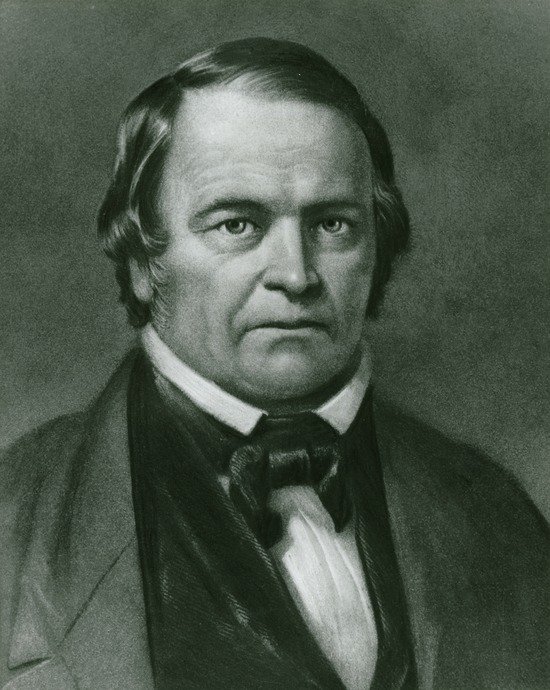
William Miller
Courtesy of the Ellen G. White Estate, Inc.
Initially known as the man who spurred the curiosity surrounding the second coming of Christ, William Miller was an American Baptist preacher and one of the forerunners of the Seventh-day Adventist Church.
Before becoming a devoted Bible scholar, Miller was a deist. After returning from serving in the War of 1812, however, he became anxious about the concepts of death and the afterlife.
He turned to the Bible for answers.
While studying his Bible, he learned much more than he ever thought he would. His memoir records how he found Scripture to contain “principle so perfectly adapted to the wants of a fallen world” and that “in Jesus I found a friend.”1
As Miller began to preach and publish information about the Second Advent, he and many of his followers, known as Millerites, were mocked openly and became unwelcome in their Christian churches.
So they went on to form the Millerite Movement, which focused on the truths they learned from their studies. They came to believe that Jesus would come in 1843 or 1844, and some of his followers eventually settled on October 22, 1844, as the exact date.
When Jesus didn’t return, the day became known as the Great Disappointment.
This set them back a bit. But they weren’t going to give up easily.
Many of his followers dove back into the Bible, back into the prophecy of Daniel 8:14. They knew the 2,300-day prophecy meant something, just not the coming of Christ.
Though Miller was wrong about the timing of the Second Coming, it spurred his followers (some of whom we’ll cover next) to start the Seventh-day Adventist Church, a movement that would continue to prepare the world for Christ’s return.
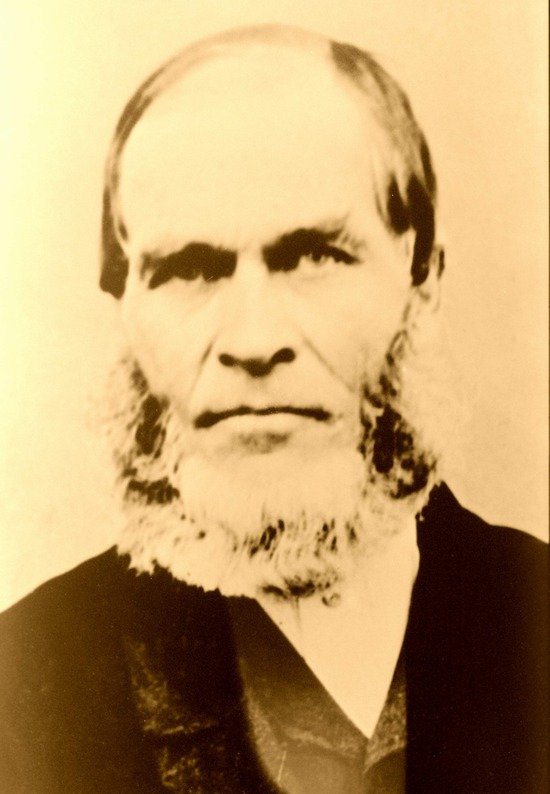
Hiram Edson
Courtesy of the Ellen G. White Estate, Inc.
Hiram Edson is perhaps best known in the Adventist Movement for his role in uncovering why Jesus didn’t come on October 22, 1844. And throughout the rest of his life, he encouraged and guided others to the truths in the Bible.
So how did he help unravel the Great Disappointment?
On October 23, as believers were reeling from their disappointment, Edson, a Millerite leader in his area, got a distinct impression that he needed to “encourage the brethren.”2
After praying with a small group of believers, he and a fellow Millerite, O.R.L. Crosier, set off through a cornfield to visit his neighbors.
But suddenly, Edson stopped.
“Brother Edson, what are you stopping for?” Crosier called out.
Edson responded, “The Lord was answering our morning prayer.”3
He shared how the Holy Spirit impressed him that Jesus wasn’t supposed to come to the earth on October 22, 1844. Rather, Jesus had begun an important work, known as the Investigative Judgment, in the Most Holy Place of the heavenly sanctuary.
This impression spurred Edson, along with Crosier and another individual named F. B. Hahn, to study the prophecy in Daniel that William Miller had studied. As they did so, they saw its connection to Jesus’ heavenly ministry (Hebrews 8 and 9).4
In 1846, Edson held a conference on his property in New York, where he shared what he had uncovered and met other Millerites who eventually started the Adventist Church.
Though he continued to work as a farmer throughout his life, spreading the gospel was always uppermost in his mind. He financially supported the church in every way he could.5 And he also went on evangelistic tours throughout New York and even up to Canada with other leaders in the Adventist Church, like Joseph Bates and J. N. Andrews.6
He received an honorary ordination to the ministry sometime between 1866 and 1875,7 but his life is truly an example of a layperson who committed to spreading the gospel in whatever ways he could.
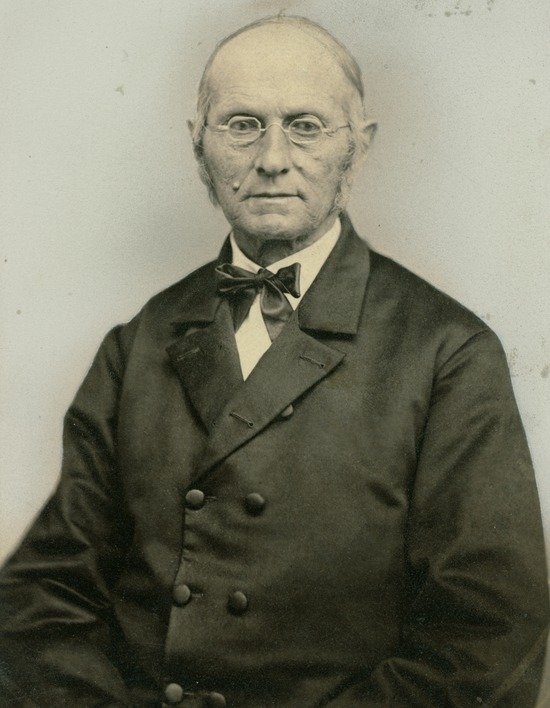
Joseph Bates
Courtesy of the Ellen G. White Estate, Inc.
Joseph Bates was a powerhouse in the Adventist Church, traveling—often on foot—from city to city to preach. He was involved in many leadership roles within the church and wrote on numerous biblical subjects, including the seventh-day Sabbath.
But before becoming an Adventist preacher, Joseph Bates spent many years out at sea. During this time, he began to read the Bible—a New Testament slipped into his suitcase by his wife. The little book changed his life, and he committed his life to God.
When he retired from the sea at age 35, he had a small fortune of $11,000—worth nearly $328,000 today.
After leaving the sea, Bates learned about William Miller and his teachings. He began working with Miller to educate people on the truths Miller and his followers had discovered. Despite the Great Disappointment, his faith in God didn’t waver.
In fact, he believed in the Advent Movement so much that he ended up putting his entire life’s savings—all $328,000 worth—toward its growth.
In 1846, Bates wrote a piece about the biblical seventh-day Sabbath and how it’s one of the ten commandments that has been forgotten by the Christian world. James and Ellen White read his article and, from it, decided to become “Sabbatarian Adventists.”
Along with James and Ellen White, Joseph Bates is one of the co-founders of the Seventh-day Adventist Church.
We’ll learn about James and Ellen White next.
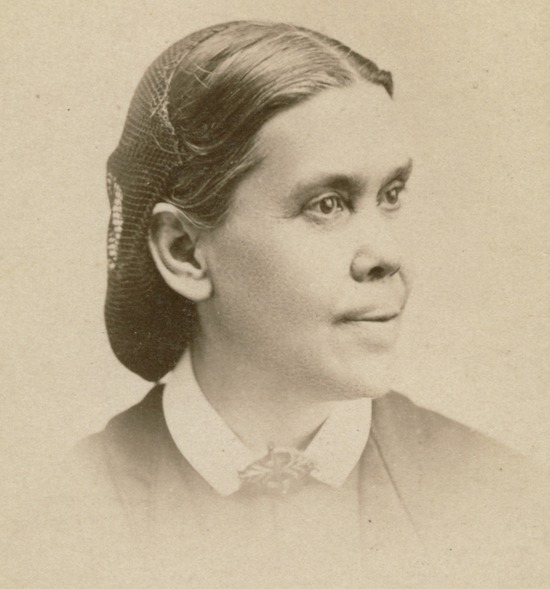
Ellen G. White
Courtesy of the Ellen G. White Estate, Inc.
Ellen White, recognized as having the biblical gift of prophecy, helped start and organize the Adventist Church. As it grew, she supported and guided its leadership, health and medical work, educational work, and worldwide missions. She was also a prolific writer, writing nearly 100,000 pages during her lifetime.
Without a shadow of a doubt, the Bible is the foundation of the Adventist faith. And everything Ellen White wrote was to make sure church leadership did not stray from the guidance of Scripture.
Through her writings, she provided the great controversy framework, which helped people see the Bible through the lens of a battle between Christ and Satan. She also sought to help people apply God’s Word to their daily lives in a practical way—no matter what denomination a person claimed.
All of Ellen White’s counsels and admonitions were documented and compiled into what is known today as the EGW Writings. These are managed by the trustees of the EGW Estate in Silver Spring, Maryland, and they remain relevant and of great value to the church.
James White
James White—Ellen White’s husband—was active in the Millerite Movement and, after the Great Disappointment, helped start the Adventist Church. He was a key proponent of organizing the General Conference of Seventh-day Adventists and played an integral role in founding other institutions.
The first Adventist school, health center, and publishing house were all started by him.
His personal health issues were what spurred the organization of an Adventist medical system. After receiving medical care while recovering from a stroke, he and his wife realized the help wasn’t what it could be. In response, they established the Battle Creek Sanitarium.
In addition to the health work, James White was involved in publishing, together with his wife. His first publication was The Present Truth, and it quickly became an effective gospel-spreading method. This periodical later became known as the Adventist Review and still circulates today.
The success of the Adventist Church in various witnessing methods—education, healthcare, and literature—can be attributed to James White’s tireless efforts.
J. N. Andrews
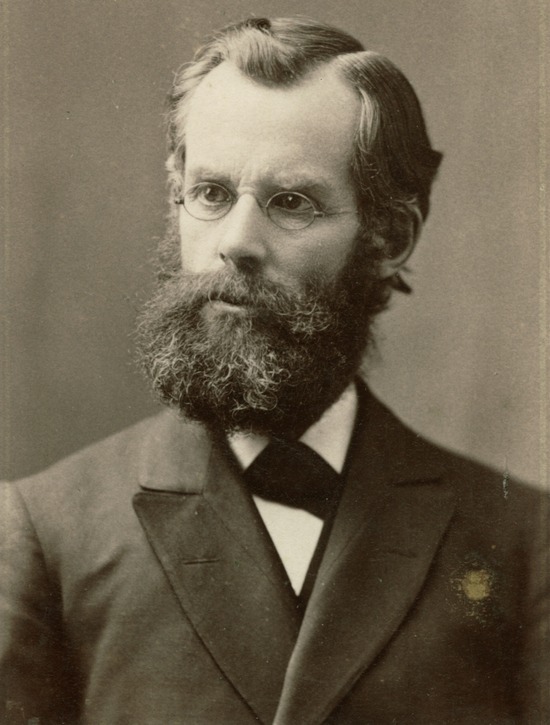
Courtesy of the Ellen G. White Estate, Inc.
John Nevins Andrews was an earnest Bible student who devoted his life to God’s work and contributed in many ways to Adventist theology. He spent many years writing and editing for Adventist publications, eventually taking the publishing work to Europe as the first Adventist missionary.
It all started when at age 12, Andrews learned about the Millerite Movement and excitedly awaited Jesus’ coming. The Great Disappointment was a big blow for him.
While struggling to know how to proceed, he learned about the seventh-day Sabbath and began to keep it. A few years later, in 1849, he met James and Ellen White and Joseph Bates, who directed him to the Bible and helped him understand what had really occurred on the day of the Great Disappointment.
At 20 years of age, he devoted himself to God’s work in numerous ways.
His earnest Bible studies led him to publish books, including an in-depth look at the history of the Sabbath. He also used his writings to support Ellen White’s writings, and together, they worked to spread the good news of Christ.
Later on, when the Adventist Church was officially established, he held the role of president of the General Conference for a time. He was also an editor of the Adventist Review.
As Seventh-day Adventist beliefs spread throughout America, Andrews knew that wasn’t enough.
If Christians were supposed to share the three angels’ messages with the whole world, then he needed to do just that. So he went to Switzerland, helping to lead the church in Europe, provide ministerial training, and establish Adventist publishing there.
Andrews’ mission work not only began the globalization of the Adventist Church but also helped grow the kingdom of God.
Today, Andrews University in Berrien Springs, Michigan—the first Adventist university—is named after J. N. Andrews in recognition of his efforts.
The Adventist Church today
Thanks to the work of Miller, Edson, Bates, the Whites, Andrews, and many others, Adventism flourished all around the world.
In the late 1870s, the church only had 16,000 members.
Twenty years later, in 1901, the worldwide membership count totaled 75,000.
Today, there are more than 20 million local church members, as well as 8,000+ schools, 100+ hospitals, and 50+ publishing houses.
With its fundamental beliefs firmly founded in biblical truth, the Adventist Church continues to grow, learn, and share the gospel with the world. The expansion of the Adventist Church hasn’t stopped…and it won’t until Christ returns to take us home.
Related Articles



- Bliss, Sylvester, Memoirs of William Miller (Joshua V. Himes, Boston, MA, 1853), p. 65. [↵]
- “The Voice of God,” Lest We Forget, vol. 3, p. 2. [↵]
- “Hiram Edson,” Adventist Learning Community. [↵]
- “The Voice of God,” Lest We Forget, vol. 3, p. 2. [↵]
- “Hiram Edson: Chosen instrument,” Lest We Forget, vol. 3, pp. 4–6. [↵]
- “Hiram Edson: The Farmer in the Cornfield,” Lineage. [↵]
- Ibid. [↵]
More Answers

Kwa Nini Waadventista Wengi Wanataka Kuishi Vijijini
Kwa Nini Waadventista Wengi Wanataka Kuishi VijijiniKuishi maeneo ya vijijini ni jambo ambalo Waadventista wamekuwa wakilithamini kihistoria, ingawa mahitaji ya maisha ya kisasa hayafanyi iwezekane kila wakati. Tukubali, faida za kuishi mjini zinaonekana wazi: fursa...

Muhtasari wa Kitabu cha Warumi: Imani, Haki, Mahusiano
Hapa kuna muhtasari na historia ya waraka mrefu zaidi wa Paulo.

Sobre o que é a Parábola do Semeador de Jesus?
A parábola do semeador é, em última análise, sobre como as pessoas responderam a Jesus Cristo e Sua mensagem do reino de Deus—o Evangelho.

Para Onde Vamos Quando Morremos?
Para aqueles de nós que perderam entes queridos ou enfrentaram problemas sérios de saúde, não podemos deixar de nos perguntar sobre a vida após a morte.

Je, Yesu ni Mikaeli Malaika Mkuu?
Wakristo wengi wamewahi kujiuliza kuhusu utambulisho wa ajabu wa Mikaeli Malaika Mkuu.
¿Por qué muchos adventistas quieren vivir en el campo?
¿Por qué muchos adventistas quieren vivir en el campo?Vivir en áreas rurales es algo que los adventistas han valorado históricamente, aunque las necesidades de la vida moderna no siempre lo han hecho posible. Seamos sinceros, las ventajas de la vida en la ciudad son...
Mfano wa Yesu wa Mpanzi Unahusu Nini?
Mfano wa mpanzi hatimaye unahusu jinsi watu walivyompokea kwa Yesu Kristo na ujumbe Wake wa ufalme wa Mungu—Injili.
¿Es Jesús el mismo Arcángel Miguel?
Muchos cristianos se han preguntado sobre la misteriosa identidad de Arcángel Miguel.
Tunakwenda Wapi Tunapokufa?
Kwa wale ambao tumepoteza wapendwa au tumekumbana na matatizo makubwa ya kiafya, hatuwezi kujizuia kujiuliza kuhusu maisha baada ya kifo.

Todo sobre el Evangelio de Mateo
O Livro de Mateus é um dos quatro relatos do Evangelho na Bíblia.

Jesus Realmente Se Importa Comigo?
Provavelmente todos nós já ouvimos frases como “Deus te ama!” e então sorrimos e assentimos.

Por Que a Água é Tão Importante?
Por Que a Água é Tão Importante?Todos sabemos que a água é uma substância sem a qual não podemos viver. Ele sacia nossa sede e nos mantém hidratados por dentro. E também é necessário para higiene e limpeza por fora. Mas você sabia que as propriedades purificadoras da...

Signs of the Second Coming of Jesus Christ
Here’s what the Bible says about how to recognize when Jesus’ return is near.
¿A dónde vamos cuando morimos?
¿A dónde vamos cuando morimos?Para quienes hemos perdido seres queridos o enfrentado problemas graves de salud, no podemos evitar preguntarnos sobre la vida después de la muerte. ¿A dónde vamos cuando morimos? ¿Y cómo lo sabemos? ¿Qué hay del cielo y el infierno? ¿Son...

Jesus Já Foi Hipócrita? Saiba o Que a Bíblia Diz
Muitos traços indesejáveis são associados à hipocrisia.

O Que São os Evangelhos Sinóticos? E João?
Saiba o que são os Evangelhos Sinóticos e por que João não está incluído.

Every Bible Verse About Hell in the Bible
Find out where and how often the Bible talks about hell.
Yote Kuhusu Injili ya Mathayo
Kitabu cha Mathayo ni mojawapo ya simulizi nne za Injili katika Biblia.

The Book of 1 Corinthians: A Topical Breakdown
Learn about the book of 1 Corinthians to support your Bible study.
Je, Yesu Aliwahi Kuwa Mnafiki? Jifunze Kile Biblia Inachosema
Je, Yesu Aliwahi Kuwa Mnafiki? Jifunze Kile Biblia InachosemaTabia nyingi zisizopendeza zinahusishwa na unafiki. Lakini kwa ujumla, wanafiki hujaribu kwa makusudi kuwafanya wengine waamini kwamba wanashikilia au kuwakilisha mfumo fulani wa imani, tabia, mtindo wa...
Je, Yesu Ananijali Kweli?
undua jinsi Yesu anavyokujali kupitia utambulisho Wake katika Mungu na utambulisho wetu ndani Yake. Upendo na uangalizi Wake kwa kila mmoja wetu ni ushuhuda Wake mwenyewe ulio hai.
¿Realmente le importa Jesús?
¿Realmente le importa Jesús?Respuesta corta: sí, Jesús realmente se preocupa por ti, específicamente (1 Pedro 5:7, RVR1960). Pero si te preguntas si Jesucristo realmente, verdaderamente se preocupa por ti, no estás solo. Gedeón, Abraham y Sara, Job, Jeremías, Elías,...
¿Fue Jesús hipócrita alguna vez? Mira lo que dice la Biblia
¿Fue Jesús hipócrita alguna vez? Mira lo que dice la BibliaMuchos rasgos indeseables se asocian con la hipocresía. Pero en general, los hipócritas intentan intencionalmente hacer creer a otros que sostienen o representan un cierto sistema de creencias, rasgo de...
Todo sobre el Evangelio de Mateo
El Libro de Mateo es uno de los cuatro relatos del Evangelio en la Biblia.
Entendendo o Livro de Marcos (Uma Visão Geral)
Um passeio pelo Evangelho segundo Marcos, incluindo informações de fundo e referências.

“Vai e não peques mais”—O que Jesus quis dizer?
“Vai e não peques mais”—O que Jesus quis dizer?Essas palavras bem conhecidas de Jesus Cristo vêm de duas histórias do Novo Testamento no livro de João—um homem curado junto ao tanque de Betesda (João 5) e uma mulher pega em adultério (João 8). A última história é a...
Injili za Kisinoptiki ni zipi? Na vipi kuhusu Yohana?
Jifunze Injili za Sinoptiki ni nini na kwa nini Yohana hajumuishwi.
Kuelewa Kitabu cha Marko (Muhtasari)
Kuelewa Kitabu cha Marko (Muhtasari)Kitabu cha Marko ni mojawapo ya simulizi nne za Injili zinazopatikana mwanzoni mwa Agano Jipya, na mwandishi wake anaaminika sana kuwa ni Yohana Marko, ndugu wa Barnaba ambaye alifanya kazi na Petro na Paulo. Hiki ndicho kitabu...
Ujumbe wa Kitabu cha Luka: Upendo wa Yesu kwa Wote
Jifunze yote kuhusu kitabu cha Luka—muktadha, maudhui, tofauti, na mambo ya kujifunza.
Didn’t find your answer? Ask us!
We understand your concern of having questions but not knowing who to ask—we’ve felt it ourselves. When you’re ready to learn more about Adventists, send us a question! We know a thing or two about Adventists.